


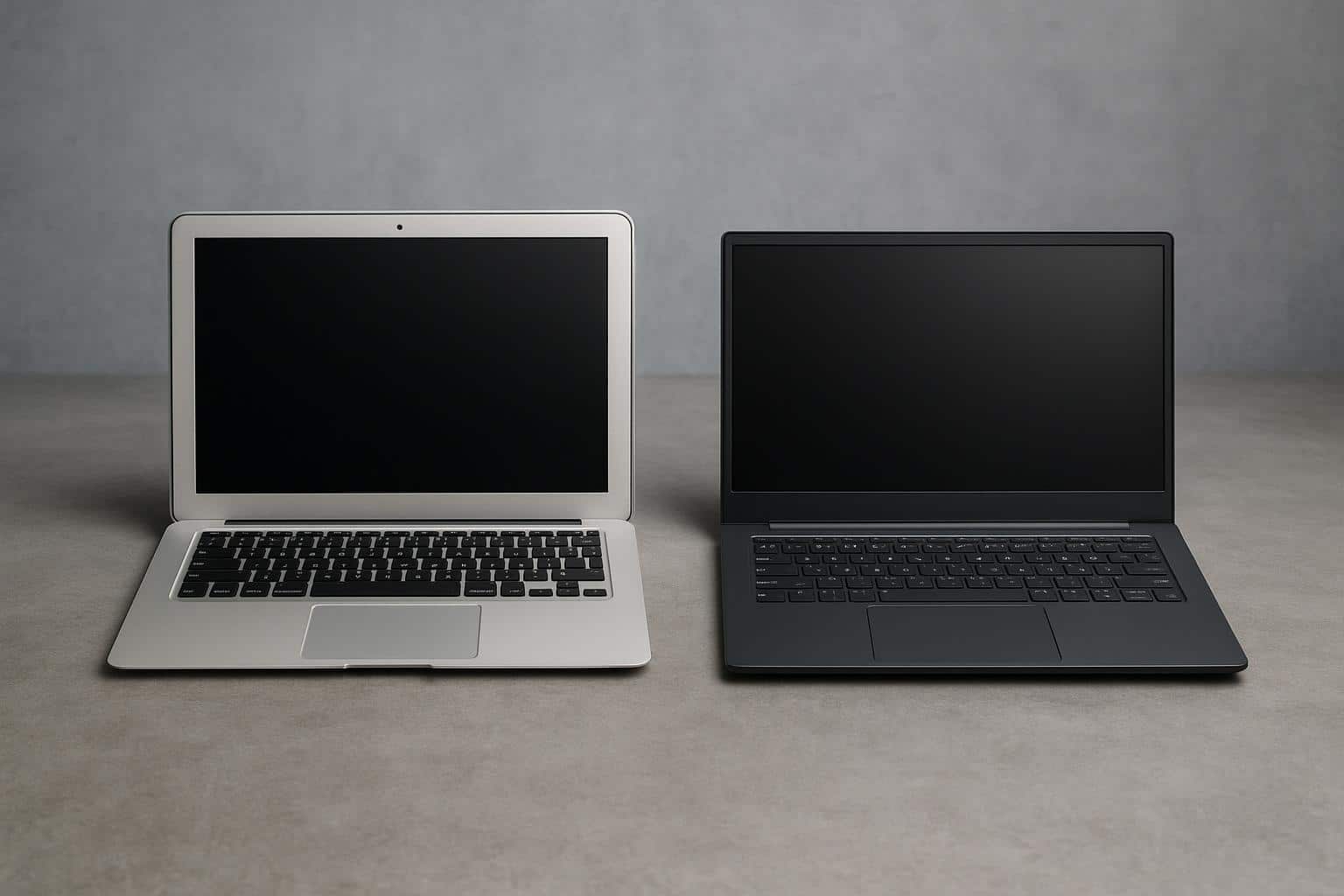
Buying a laptop often begins with an assumption that seems entirely reasonable: newer must be better. A machine released this year should surely outperform one that has already been through a previous owner, while a brand-new budget model feels like a safer purchase than premium technology from a few years ago. In practice, the comparison is rarely that simple.
Laptop ranges are built for very different parts of the market. An inexpensive new model may have been designed from the outset to meet a strict price point, whereas an older premium laptop may originally have been engineered around better displays, stronger processors, higher-quality materials and a more refined overall experience. Once depreciation has reduced the price of that premium machine, the two can end up competing for the same buyer despite having started life in entirely different categories.
That is where looking beyond the manufacturing date becomes useful.
Premium Hardware Does Not Suddenly Become Basic Hardware
A high-end laptop does not lose the qualities that originally made it expensive simply because a newer generation has arrived. A well-built aluminium chassis remains a well-built chassis, a good display remains pleasant to work on, and a capable processor does not suddenly become unusable when its successor launches.
Budget laptops face a different set of compromises. Manufacturers working within a low retail price may need to economise somewhere, whether that means the display, storage, memory, build quality, speakers or processor. None of those compromises necessarily makes the machine unsuitable, particularly for straightforward tasks, but they can affect how satisfying it is to use every day.
This means a buyer comparing laptops at £500, for example, may not really be comparing two equivalent products. One could be a brand-new machine designed to sell for £500, while the other might be a premium computer that originally cost considerably more but has fallen into the same price bracket after several years.
For someone willing to consider previous-generation hardware, that difference can create interesting opportunities.
Everyday Computing Does Not Advance at the Same Pace as Marketing
Laptop manufacturers have good reasons to promote each new generation. Processors become faster, battery efficiency improves and fresh features are added. Yet the tasks performed by many users have not changed nearly as dramatically.
Writing documents, browsing the web, holding video calls, managing email and streaming media do not require the fastest processor currently available. Even more demanding jobs such as photo editing and moderate creative work can run comfortably on hardware that is several years old, provided the original specification was strong enough.
This is particularly noticeable with premium machines because they often begin their lives with more performance headroom. What was considered powerful three years ago may still be comfortably above what a typical user needs today.
The practical result is that the difference between generations can look dramatic on a specification chart while feeling much smaller during an ordinary working day.
Build Quality Has Financial Value Too
Performance receives most of the attention when computers are compared, but physical construction can affect long-term value just as much.
A laptop is opened, closed, carried, plugged in and typed on thousands of times. Hinges, keyboards, trackpads and charging ports therefore matter enormously over several years of ownership. Better-built equipment may withstand that routine more gracefully than a machine where materials and construction have been chosen primarily to minimise cost.
Displays deserve similar consideration. A brighter, sharper or more colour-accurate screen can improve every task performed on the computer, yet it does not appear in headline processor comparisons. The same is true of speakers, webcams and trackpads.
These details are why an older premium model can sometimes feel newer in everyday use than a freshly purchased budget machine.
The Depreciation Advantage
The first owner of expensive technology typically absorbs the steepest part of its depreciation. Once the device is no longer new, the premium attached to factory packaging and being the first owner disappears, even though the underlying hardware may have changed very little.
For the next buyer, that can be an advantage. Rather than paying for the period in which the laptop loses value fastest, they are buying after much of that reduction has already occurred.
This is where the market for a refurbished macbook can become particularly interesting. Instead of comparing one purely on age, a buyer can look at the original position of the machine within Apple’s range, its processor generation, memory, storage and overall condition, then compare those qualities with what the same budget would purchase new.
In some cases, the choice may be between an older machine from a premium product line and a completely new computer that was designed around a much lower original price.
Refurbished and Randomly Used Are Not the Same Proposition
Buying older technology does introduce risks, which is why the way the laptop has reached the market matters.
A privately sold second-hand device may offer an excellent bargain, but the buyer often knows relatively little about its history. Battery condition, previous repairs and hidden faults may not become apparent until after the purchase.
Proper refurbishment should provide greater certainty. The machine can be tested, cleaned and assessed, with faults addressed where necessary and cosmetic condition graded before sale. A meaningful warranty and returns policy also give the buyer some recourse if problems emerge.
That distinction is important because the strongest argument for older premium hardware depends on the machine actually being in dependable condition. A heavily worn laptop with unknown problems is not automatically a better purchase simply because it began life as an expensive model.
Specification Still Matters More Than the Badge
The premium-versus-budget comparison should not become another shortcut where brand reputation replaces proper research. An older laptop can eventually become too old for a particular buyer’s needs, especially when software support, battery condition or demanding applications are involved.
Memory and storage deserve close attention because they can have a major influence on how useful a laptop remains. A machine with too little storage may quickly become frustrating, while inadequate memory can restrict multitasking regardless of how premium the case feels.
Software support should also be considered. Anyone intending to keep a laptop for several more years needs reasonable confidence that the operating system and important applications will continue to work securely.
The aim is therefore not to buy the oldest premium device that fits the budget. It is to find the point where depreciation has reduced the price while the hardware still has enough useful life ahead of it.
New Still Wins in Some Situations
There are good reasons to purchase brand-new hardware. Someone who needs maximum performance for demanding professional software may benefit directly from the latest processor generation. A buyer planning to keep the same machine for many years may also place greater value on the longest possible software-support window and a completely fresh battery.
There is also something to be said for simplicity. New equipment comes with a known history and straightforward manufacturer support, which some buyers will reasonably decide is worth paying extra for.
The important point is that buying new should be a decision rather than an automatic reflex.
For many everyday users, the real choice is not between a good new laptop and an inferior old one. It can be between a modest machine that happens to be new and a substantially better-designed machine that happens not to be.
Once laptops are compared by what they offer rather than when their boxes were first opened, the advantage of newness can shrink surprisingly quickly.
