


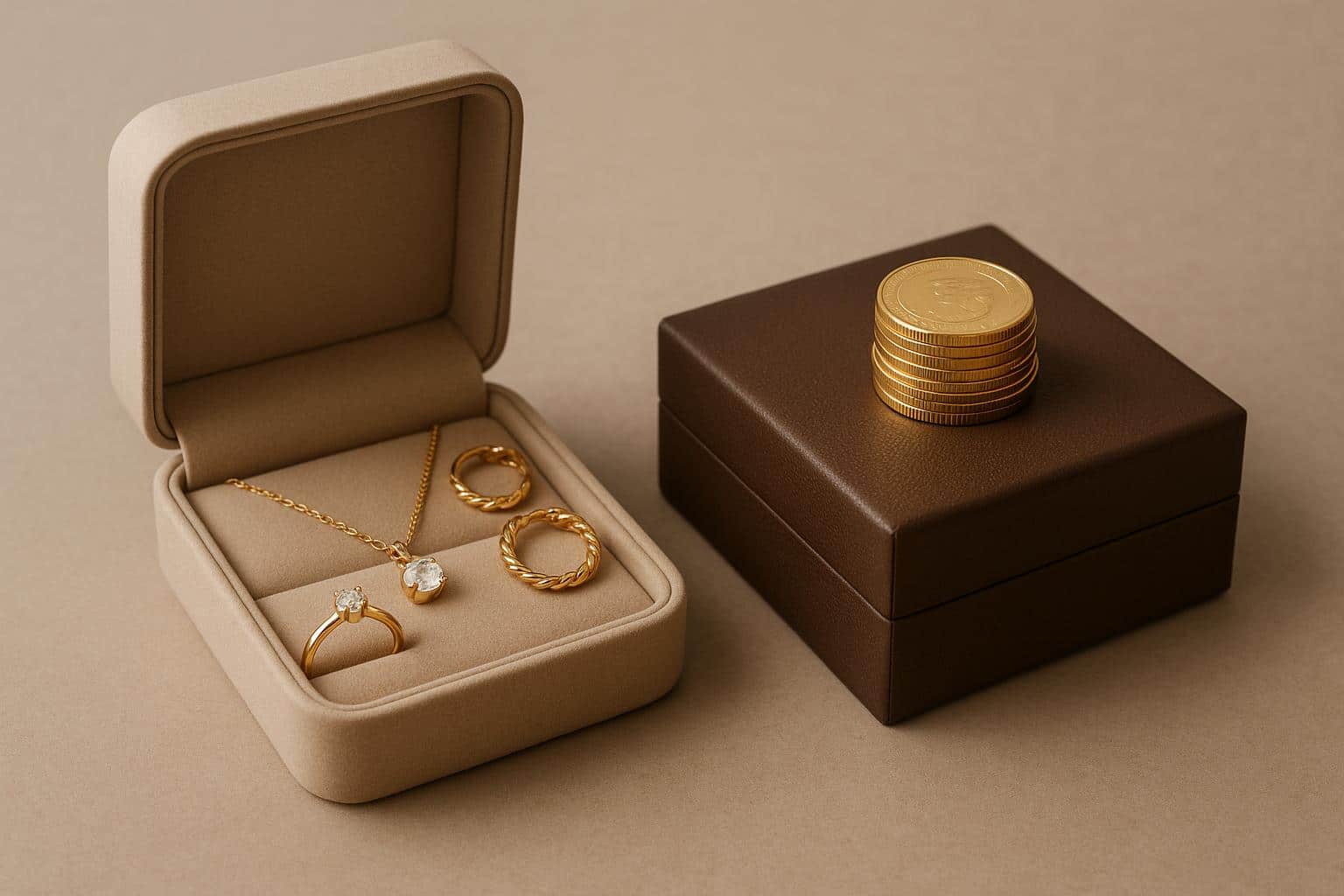
Jewellery sits in an unusual position because it can be both deeply personal and financially significant. A ring, necklace or watch may be bought to mark an engagement, anniversary or milestone, yet the same item may also be expensive enough for its future value to become part of the purchasing decision.
Those two motivations can easily become confused. The qualities that make a piece meaningful to wear are not necessarily the same qualities that help it retain value over time. Someone buying jewellery primarily for enjoyment may reasonably prioritise appearance, style and sentiment. Someone thinking about resale value needs to look much more closely at scarcity, certification, market demand and the difference between retail price and secondary-market value.
That distinction matters especially in the diamond market. Natural and lab-grown diamonds can look remarkably similar, but they behave very differently once value retention enters the discussion.
Jewellery Bought to Wear Is Usually About the Person
When jewellery is bought for personal use, the most important question is often simple: does the wearer love it?
That may mean choosing a particular cut, setting, metal or design because it suits their taste. A lab-grown diamond may appeal because it allows a buyer to afford a larger stone or higher specification within the same budget. A natural diamond may carry more traditional appeal or feel more appropriate for a particular occasion.
In this context, resale value may be secondary or irrelevant. If the intention is to keep the item indefinitely, then the fact that another buyer might pay less for it in ten years does not necessarily make it a poor purchase.
This is especially true with engagement rings. Their importance is often emotional rather than financial, and their perceived value to the owner may bear little relation to what they could achieve on the open market.
Buying to Hold Value Requires a Different Mindset
Once jewellery is viewed partly as an asset, sentiment has to take a back seat.
A piece that looks expensive in a shop is not automatically a strong store of value. Retail prices can include design, branding, shop overheads, marketing and a significant margin that may not be recoverable later.
The secondary market works differently. Buyers there tend to focus more heavily on the intrinsic qualities of the item: the stone, the metal, the brand, the condition, the certification and the level of demand.
That is why a piece costing several thousand pounds at retail may be worth significantly less if sold soon afterwards. The original purchase price reflects the experience of buying new; the resale price reflects what another buyer is willing to pay for a pre-owned item.
Understanding that gap is essential for anyone who expects jewellery to behave like an investment.
Natural and Lab-Grown Diamonds Illustrate the Difference Clearly
Lab-grown diamonds have changed the jewellery market because they offer many of the visual and physical characteristics of natural diamonds at a lower price.
For someone buying purely to wear, that can be highly attractive. A buyer may be able to choose a larger stone or a higher clarity grade without increasing the budget substantially. The jewellery still provides the appearance and experience they want.
For someone focused on long-term value, the calculation is different.
Lab-grown diamonds can be produced in increasing quantities, and advances in manufacturing have helped reduce production costs. That means scarcity plays a very different role from the one it does with natural diamonds.
Natural stones, by contrast, are finite and historically have had a more established resale market. That does not mean every natural diamond will rise in value or even hold its original retail price, but scarcity and existing market structures tend to support them differently.
Specialists such as Edinburgh Asset Finance emphasise this distinction when comparing natural and lab-grown diamonds, particularly around resale potential and how value is assessed in secondary markets. The comparison is useful because it shows how the same category of product can make sense for one type of buyer and far less sense for another.
Certification Matters More When Value Matters
If jewellery is bought as something that may later be sold, documentation becomes increasingly important.
A recognised grading report can provide independent information about a diamond’s carat weight, colour, clarity and cut. Without that documentation, a future buyer may need to rely more heavily on their own assessment, which can reduce confidence and therefore price.
The same principle applies to branded jewellery, where receipts, boxes and provenance can sometimes contribute to resale appeal.
For a wearer, none of this may matter very much. The ring still looks the same whether the certificate is stored safely or lost in a drawer.
For an owner thinking about future liquidity, however, documentation can become part of the asset itself.
Brand and Design Can Complicate the Picture
Some jewellery derives value from more than its materials.
A piece from a recognised luxury house may attract stronger resale demand than a visually similar unbranded item. Certain designs become collectible, and provenance can add another layer of value.
However, brand recognition is not a guarantee of strong resale performance. Fashion changes, buyer preferences shift and even prestigious jewellery can sell below its original retail price.
This is another reason the retail-versus-investment distinction matters. A buyer may happily pay a premium because they value the design, heritage and presentation. That can still be a satisfying purchase even if the premium is not fully recoverable later.
The problem begins only when enjoyment value is mistaken for investment value.
Precious Metal Content Provides a Different Kind of Support
Gold and platinum introduce another layer because their underlying materials have recognised commodity value.
A piece of jewellery containing substantial amounts of precious metal will generally retain some intrinsic worth regardless of fashion. That does not guarantee that the item will sell for anything close to its retail price, but it does provide a more tangible baseline than design alone.
This can make simpler, high-purity pieces easier to assess than jewellery where most of the price came from branding, workmanship or retail positioning.
Again, the buyer’s purpose determines whether this matters. Someone choosing an intricate white-gold ring because they adore the design may not care about metal value. Someone thinking in asset terms almost certainly should.
Liquidity Is Often Overlooked
An asset is only as useful as the market available when the owner wants to sell.
Some jewellery can be difficult to realise quickly without accepting a lower price. A specialist piece may need the right buyer, and a stone that looked valuable at retail may prove less liquid in the secondary market.
This is one of the biggest differences between jewellery and more conventional financial assets. Shares or funds can often be priced and sold quickly. Jewellery requires inspection, valuation and a buyer willing to accept that particular item.
Anyone buying with future value in mind should therefore think not only about what the item might be worth, but also how easily that value could actually be realised.
The Better Question Is Why You Are Buying
There is nothing wrong with buying jewellery for pleasure. In fact, trying to force every purchase into an investment framework can strip away much of what makes jewellery meaningful.
A lab-grown diamond can be an excellent choice for someone who wants maximum visual impact within a fixed budget. A distinctive designer piece can be worthwhile because it brings enjoyment every time it is worn. Sentimental value can also far outweigh any eventual resale price.
The difficulty comes when a buyer expects the same piece to satisfy both emotional and financial goals without compromise.
Jewellery bought to wear should primarily suit the person who will own it. Jewellery bought to hold value should be assessed much more critically, with attention to scarcity, certification, brand strength, intrinsic materials and resale demand.
Those are different purchasing decisions, even when the item in the box looks almost identical.
The most sensible approach is therefore to decide the purpose before deciding the piece. If enjoyment is the priority, choose what feels right and treat future value as a secondary consideration. If capital preservation matters, look beyond the shop window and think carefully about how the item is likely to behave once it enters the secondary market.
