


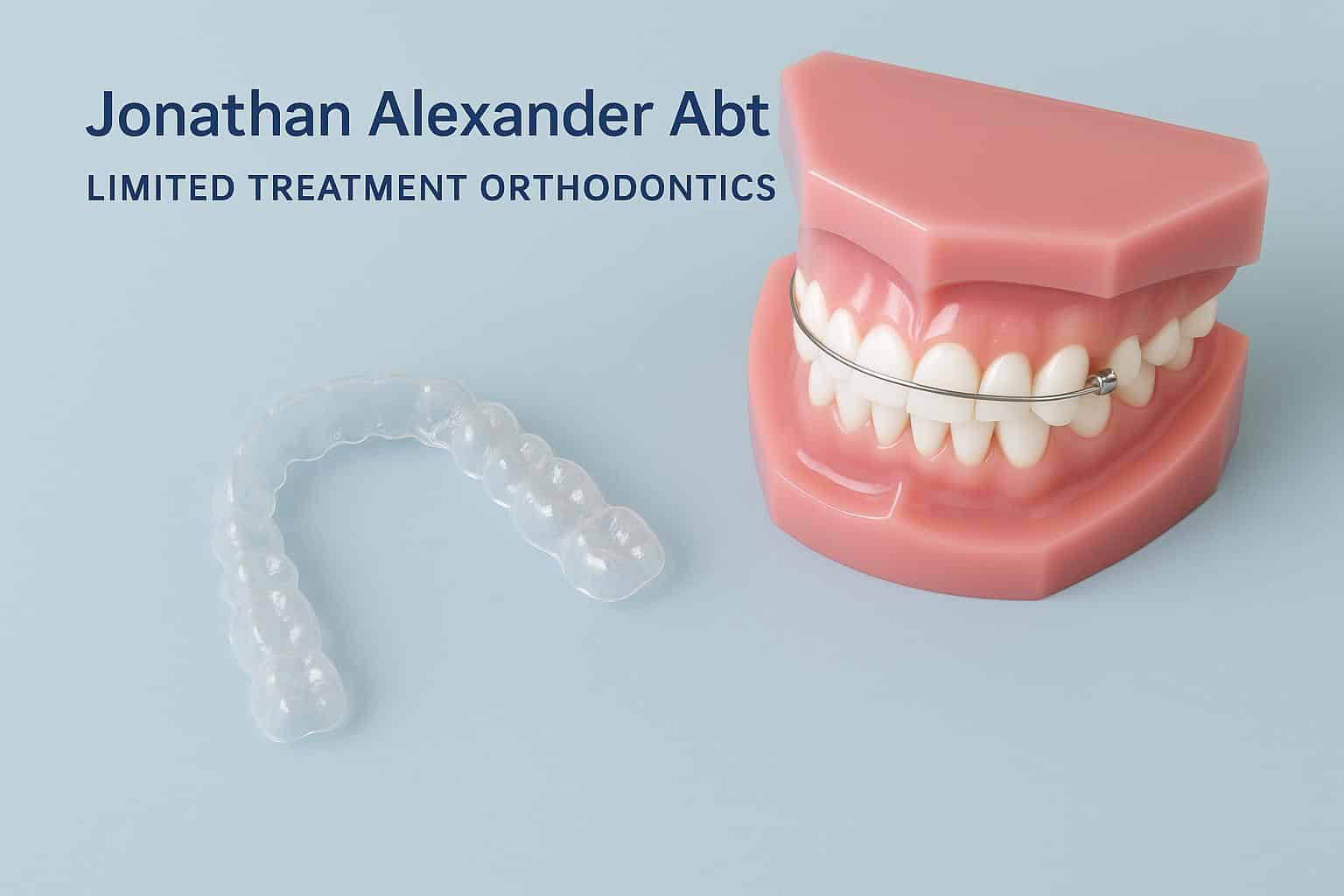
Jonathan Alexander Abt is an experienced orthodontist who previously worked at Luton and Dunstable Hospital treating complex cases, including surgical orthodontic cases. This article will look at limited treatment orthodontics, a field that is about more than just giving patients healthy smiles, helping them to make the best of their teeth for life.
Orthodontics is a branch of dentistry that centres around the growth of teeth, jaws and the face. The overall aim is to achieve harmony of the mouth and jaws, enabling patients to bite together correctly, eat more comfortably, and care for their teeth and gums more easily.
Orthodontists are in high demand in England and Wales, with more than 200,000 children and teens undergoing orthodontic treatment each year and growing numbers of adults and youths seeking treatment on a private basis.
Benefits of orthodontic treatment include:
- Alignment of the upper and lower arches
- Closing of spaces and elimination of crowding
- Enhanced facial aesthetics
- Reduced likelihood of damage to permanent teeth
- Correction of the bite to ensure the front teeth meet when closed and the back teeth mesh together
- Accommodating displaced, unerupted or impacted teeth
- Reversing drifting of teeth in elderly patients with advanced gum disease
- Preparation for advanced dental treatment, such as bridges, crowns or dental implants
Orthodontics has become more accessible thanks to increased publicity and understanding of its many benefits. Adults present with an array of complaints associated with function as well as dental and facial aesthetics, and many are keen to avoid protracted, complex treatment. Compromise treatments can be an attractive option, typically involving only the anterior six teeth on either one or both arches. When discussing limited treatment orthodontics with patients, care providers should also provide information on traditional restorative orthodontics options, having carefully assessed the diagnostic criteria.
Limited treatment orthodontics is used to address patients’ wishes without necessarily tackling all aspects of the bite, often leaving slight imperfections that the patient must be made aware of, along with all the possible implications of this approach. If lifelong aftercare will be required, the patient must be made aware of this in advance. Limited treatment orthodontics is inappropriate where long-term consequences such as jaw joint discomfort, damage to dental restorations or tooth wear could result.
Treatment may involve input from different specialists, in which case the roles of each treating clinician and the timing of interventions must be made clear to patients. They must be made aware of all the associated risks, the lifespan of restorations, and the likely financial costs in relation to repairs and replacements. Although limited treatment orthodontics implies a short treatment time, the long-term result should be as secure as a more comprehensive approach. In formulating treatment plans, specific objectives should be discussed along with complicating factors and the patient’s wishes. These aims need to be carefully documented to verify informed consent has been sought and that the patient understands the full extent of the treatment offered along with any possible limitations.
Typically utilised with adult patients to correct minor dental irregularities, limited treatment orthodontics is a cosmetically motivated treatment that has become a popular alternative to conventional orthodontic treatments. Although general dental practitioners who have completed further training can practice limited treatment orthodontics, for quality care delivery it is crucial to appreciate the limitations and scope of the practice. Research suggests that the principal reasons adults seek orthodontic treatment were purely appearance-related, such as crookedness, dental protrusion, discolouration, spaced arches and other tooth irregularities.
Several studies show that crowded arches, the presence of decay and the colour of teeth can induce social judgements that can affect various social encounters. Limited treatment orthodontics offers a means of helping patients to improve their physical appearance with an emphasis on lifelong retention and positive long-term outcomes.
