


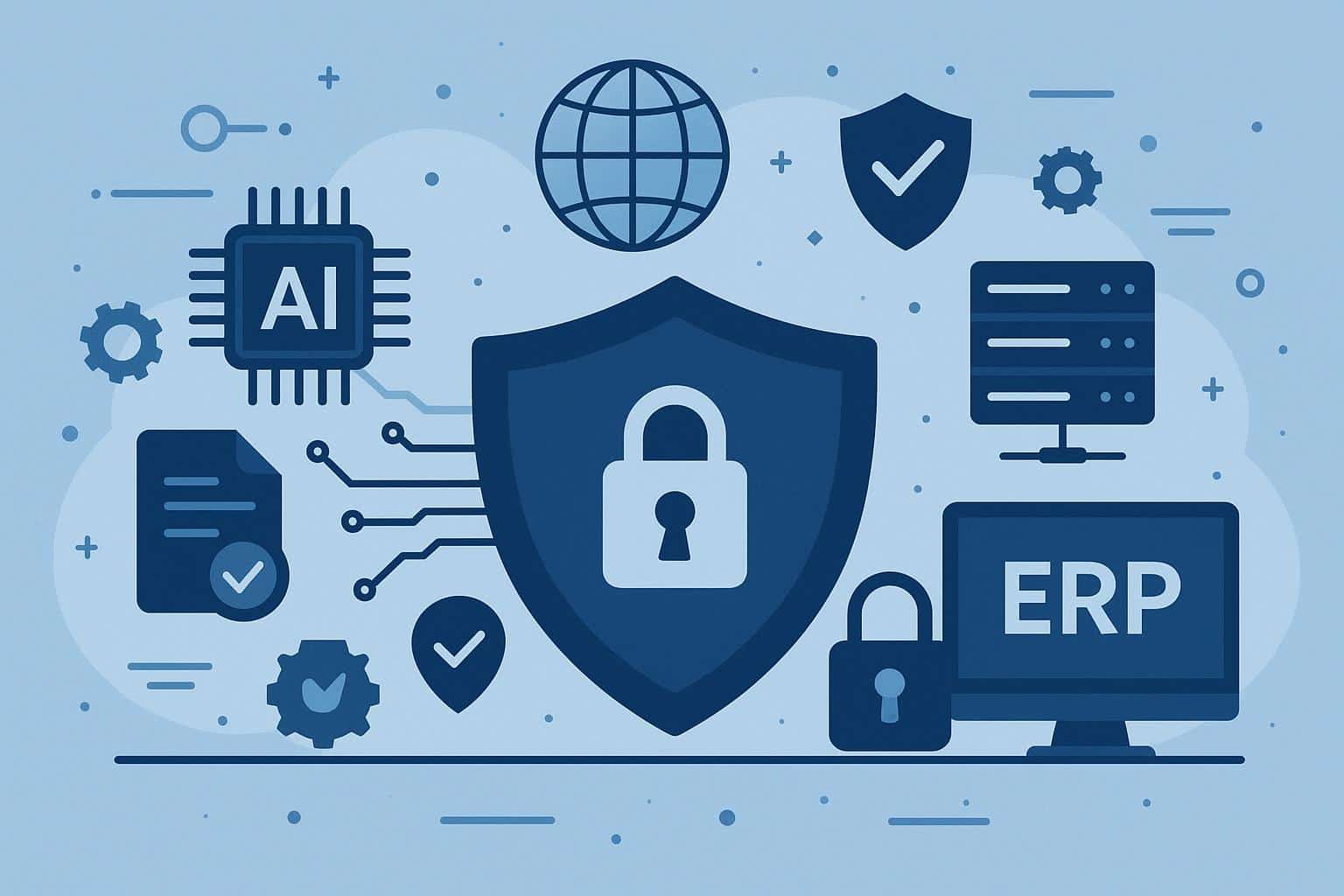
As businesses increasingly adopt AI ERP software, understanding security and compliance considerations becomes essential. Enterprise resource planning systems powered by artificial intelligence offer automation, analytics, and integration capabilities that transform business operations. However, these benefits also introduce new security risks and regulatory obligations. Companies must evaluate how their AI ERP software handles sensitive data, prevents unauthorized access, and complies with industry standards to protect both their operations and stakeholders.
Data Security Challenges in AI ERP Software
AI ERP software processes vast amounts of sensitive information, including financial records, employee data, customer details, and supply chain information. The centralized nature of ERP systems makes them an attractive target for cyberattacks. Unauthorized access, data breaches, and ransomware attacks can compromise business operations, cause financial loss, and damage reputation. Protecting this information requires a combination of technical safeguards, such as encryption, multi-factor authentication, and secure access controls.
The AI component of ERP software adds complexity to security considerations. Machine learning algorithms often rely on large datasets for predictive analytics and decision-making, increasing the volume of sensitive information that must be safeguarded. Companies must ensure that their AI ERP software includes robust monitoring, anomaly detection, and threat mitigation measures to prevent potential vulnerabilities from being exploited. Regular software updates and patches are also critical to maintaining system integrity and protecting against emerging threats.
Compliance Requirements for Enterprises
Businesses adopting AI ERP software must navigate a variety of regulatory requirements depending on their industry and geographic location. Regulations such as GDPR in Europe, HIPAA for healthcare data, and SOX for financial reporting impose strict standards for data handling, storage, and reporting. Non-compliance can lead to substantial fines, legal liabilities, and reputational damage.
AI ERP software should support compliance by providing features that facilitate auditing, reporting, and data traceability. Automated logging of transactions, user activity monitoring, and access records help demonstrate adherence to regulatory requirements. By integrating compliance capabilities into the system, organizations can streamline regulatory reporting, reduce administrative burdens, and ensure that data management practices align with legal obligations.
Best Practices for Secure and Compliant AI ERP Software
Selecting and maintaining AI ERP software with security and compliance in mind involves a proactive approach. Businesses should begin with a thorough risk assessment to identify vulnerabilities and regulatory gaps. Understanding the types of data processed by the ERP system, as well as the potential consequences of a breach, helps prioritize security measures effectively.
Vendor evaluation is another critical step. Organizations must ensure that their AI ERP software provider adheres to industry security standards, offers regular updates, and has clear protocols for incident response. Employee training is equally important, as human error is a leading cause of data breaches. Staff should understand security policies, safe data handling practices, and procedures for reporting potential threats.
Monitoring and auditing are ongoing responsibilities. Businesses should establish regular security assessments, penetration testing, and compliance audits to identify weaknesses and address them promptly. AI ERP software that supports automated alerts, real-time monitoring, and reporting tools can greatly assist in maintaining a secure and compliant environment.
Long-Term Benefits of Secure and Compliant AI ERP Software
Ensuring that AI ERP software meets security and compliance standards offers long-term advantages beyond regulatory adherence. A secure system protects business continuity by minimizing the risk of data loss or operational disruption. Compliance-focused features improve transparency, enhance trust with clients and partners, and reduce legal and financial exposure.
Moreover, organizations with robust security and compliance practices are better positioned to leverage the full potential of AI ERP software. Confident in the integrity of their data, businesses can rely on advanced analytics, automation, and AI-driven insights to optimize processes, improve decision-making, and drive growth. By prioritizing security and compliance from the outset, companies create a foundation for sustainable and scalable enterprise operations.
