





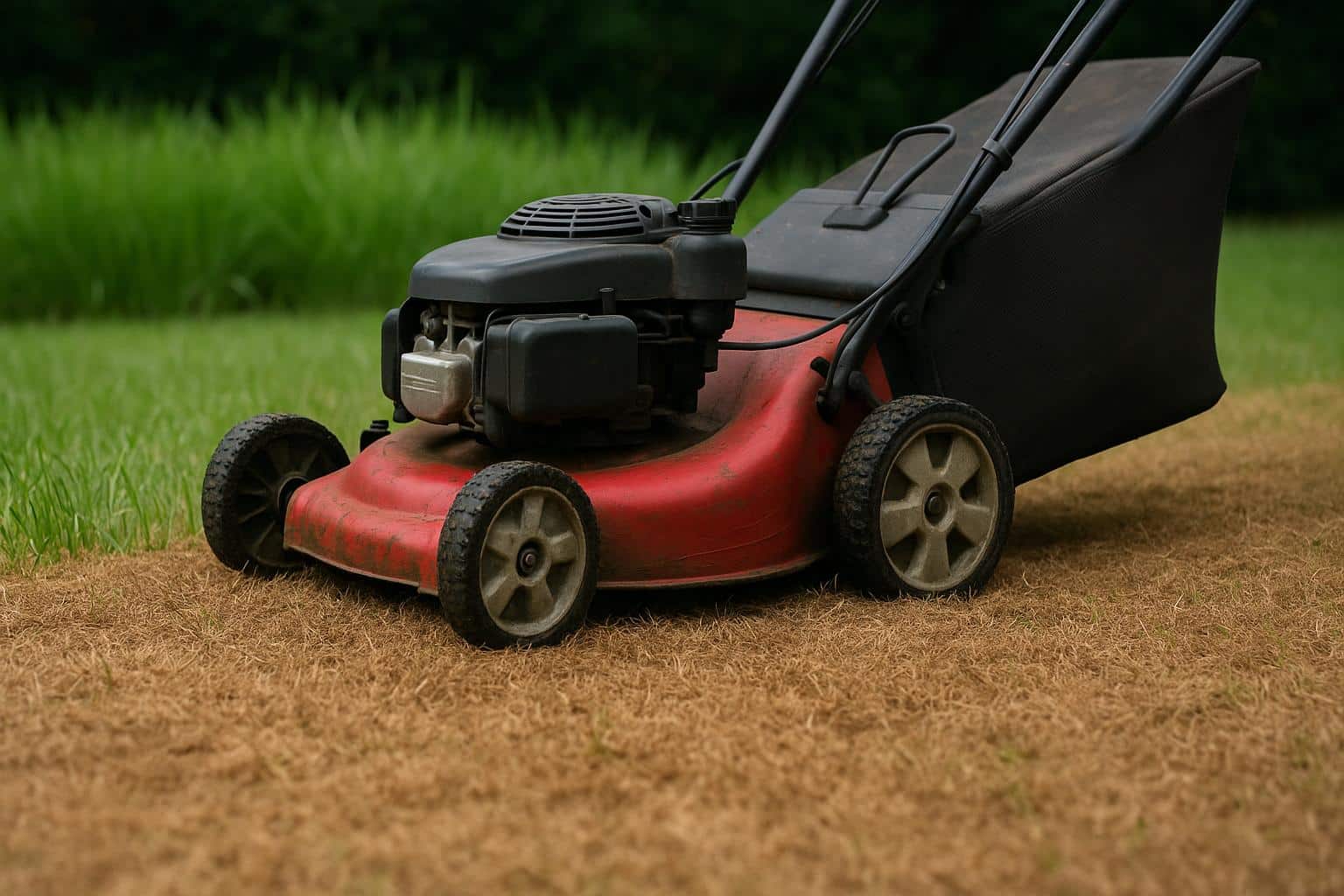
A freshly cut lawn is supposed to look greener, neater and healthier, so it can be frustrating when the exact opposite happens. You mow the grass, stand back expecting crisp stripes and an even finish, and instead notice that the lawn has developed a brownish or straw-coloured cast. Sometimes the discolouration appears almost immediately, while in other cases it becomes obvious a day or two later. The instinct is often to blame dry weather, poor soil or a lack of water, but the mower itself can be one of the most important clues.
Grass reacts to cutting in much the same way as any other plant tissue. A clean cut made with a sharp blade causes relatively little damage and allows the grass to recover quickly. A poor cut, however, can tear, bruise or shred the tips of the leaves rather than slicing through them neatly. Those damaged ends lose moisture, dry out and turn brown. When thousands of grass blades are affected across the lawn at once, the overall surface can look dull, pale or scorched even though the roots and lower parts of the plants are still healthy.
One of the easiest ways to tell whether this is happening is to look closely at the grass rather than viewing the lawn from a distance. Healthy, cleanly cut grass should have fairly neat ends. If the tips appear ragged, frayed or whitish before turning brown, the mower blade is an obvious place to start. A blade gradually loses its cutting edge through normal use, but stones, twigs, exposed soil and other hard objects can accelerate the process. Even a blade that still looks reasonably sharp to the eye may no longer be producing the clean finish the lawn needs.
The timing of the problem can be revealing too. If the lawn was green before mowing and then develops pale or brown tips shortly afterwards, mechanical damage is more likely than a deeper lawn-health issue. Drought, disease and nutrient problems can certainly cause discolouration, but they tend to produce broader patterns or continue developing regardless of whether the lawn has just been cut. Brown tips appearing consistently after mowing suggest that the cutting process itself deserves attention.
Cutting height is another major factor. Removing too much grass in a single pass can place the lawn under considerable stress, especially during warm or dry weather. Grass leaves are responsible for photosynthesis, and taking away a large proportion of their surface suddenly leaves the plant with less ability to generate energy. The soil may also become more exposed to sunlight, increasing evaporation and making the grass dry out more quickly. A lawn that looked reasonably healthy before a severe cut can therefore begin to look yellow or brown soon afterwards.
A useful general principle is to avoid removing a large proportion of the grass height at once. If a lawn has become particularly long, it is usually better to reduce it gradually over two or more cuts rather than immediately lowering the mower to the desired finishing height. This is especially important after a holiday, during periods of rapid spring growth or when wet weather has delayed mowing for several weeks. A gradual reduction allows the grass to adjust and reduces the shock caused by sudden scalping.
Uneven ground can make the problem worse. A mower set to what seems like a sensible height can still cut too closely where the ground rises or dips. These areas often appear as isolated brown or yellow patches after mowing. If the same parts of the lawn repeatedly suffer, it can be worth watching the mower deck as it passes over them. High points may be getting shaved more closely than the surrounding grass, while wheels sinking into softer ground can produce a similar result.
How the mower is being used matters just as much as its condition. Pushing too quickly through thick or long grass can overwhelm the cutting system, leaving the blade to tear at grass rather than cutting it cleanly. Wet grass can create similar problems because it bends, clumps and sticks to the underside of the deck. That can interfere with airflow and prevent an even cut. Slowing down, mowing when the lawn is reasonably dry and occasionally checking underneath the deck can make a noticeable difference to the finish.
A dirty mower deck is easily overlooked because the problem develops out of sight. Layers of compacted grass can build up underneath, particularly if the mower is frequently used in damp conditions. This reduces the space available for clippings to circulate and can interfere with the airflow that helps lift grass towards the blade. The result may be patchy cutting, clumping and a lawn that appears rougher or more uneven afterwards. Cleaning the underside of the mower at appropriate intervals can therefore improve both performance and cut quality.
Blade condition remains one of the most important elements, though, and there is a point where sharpening may no longer be enough. A blade that is badly bent, cracked or heavily damaged should generally be replaced rather than repeatedly ground back. Balance is important as well. Removing significantly more metal from one side than the other during sharpening can cause vibration, place additional strain on the mower and reduce the quality of the cut. For owners who are unsure about blade condition or correct replacement, a machinery specialist such as Ron Smith can be useful when identifying the right parts and maintenance approach for a particular mower.
Not every brown lawn is caused by the machine, of course. Weather can magnify the effects of mowing considerably. Cutting during the hottest part of a sunny day can expose freshly trimmed grass to intense heat at exactly the moment it is losing moisture through newly cut surfaces. During dry periods, the lawn may already be under stress before the mower comes anywhere near it. A severe cut at that stage can push the grass further into dormancy and produce a noticeably browner appearance.
Mowing earlier or later in the day can help during hot weather, provided the grass is not soaking wet with morning dew. It may also be sensible to raise the cutting height temporarily. Slightly longer grass shades the soil, helps retain moisture and supports deeper rooting. The immaculate very-short finish that looks appealing in mild, damp conditions can become difficult to maintain during prolonged heat.
Watering practices also play a part. Frequent shallow watering can encourage roots to remain near the surface, leaving the lawn more vulnerable when temperatures rise. Less frequent but deeper watering generally encourages stronger root development. If the lawn turns brown after mowing during a dry spell, it is therefore worth considering whether the cut simply exposed an underlying moisture problem rather than causing the entire issue itself.
Another possibility is that mower wheels are contributing to the appearance. In very dry weather, repeated passes over the same route can flatten already-stressed grass and compact the surface slightly. Changing the mowing direction from one cut to the next can help. It also prevents grass from developing a permanent lean in one direction and can contribute to a more even finish over time.
Grass clippings deserve attention as well. Fine clippings distributed evenly across a healthy lawn are usually not a problem and can return some nutrients to the soil. Thick clumps are different. They can block light and airflow, trapping moisture underneath and leaving patches of grass discoloured. This is particularly common when mowing wet or overgrown lawns. If large clumps remain after cutting, collecting or spreading them out may prevent localised damage.
It is worth remembering that the lawn itself can tell you quite a lot if you look closely enough. Brown, shredded tips point towards blade condition. Very short or bare-looking patches suggest cutting height or uneven ground. Random yellowing that has no relationship to mowing may indicate nutrition, drainage, pests or disease. Uniform browning during hot weather is more likely to involve moisture stress. The pattern matters, and examining it before reaching for fertiliser or turning on the sprinkler can save a lot of unnecessary work.
Routine mower maintenance makes many of these problems less likely. Checking the blade periodically, keeping the deck clean, ensuring the height adjustment works correctly and dealing with unusual vibration or noises before they worsen can all improve the quality of each cut. The mower does not need to be complicated or expensive to produce a healthy finish, but it does need to be operating as intended.
A lawn that turns brown after mowing is therefore not always a sign that something is seriously wrong with the grass. In many cases, the colour change is simply the visible result of how the grass has been cut. Sharp blades, sensible cutting heights, slower mowing through difficult areas and a little awareness of weather conditions can transform the result. Before assuming the lawn needs expensive treatments, it is often worth starting with the machine that has just passed over every square metre of it. Sometimes the grass is not telling you that the lawn is failing at all; it is telling you that the mower needs attention.

