


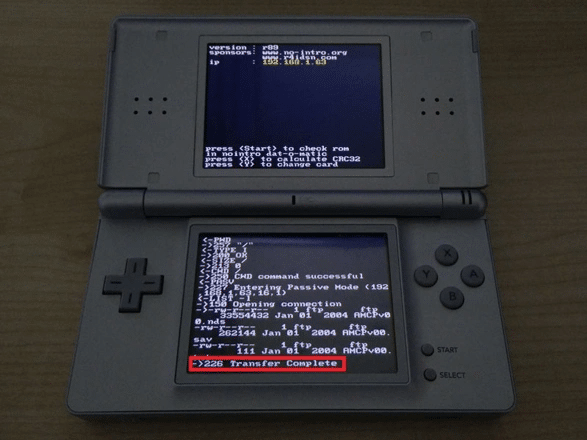
Trying to understand an old gaming console isn’t as effortless as turning it on anymore. The hardware that once defined entire generations of games is wearing out, breaking down, and becoming harder to find. Manuals are often incomplete, the way the systems behave can vary from one unit to another, and many of the deeper mechanisms behind their operation remain unclear.
In this situation, Emulator ROMs have evolved from being simple safety copies into something far more important — they’ve become the most dependable record of how these machines truly functioned.
Each ROM functions as a precise digital snapshot — not just of game content, but of the timing, patterns, and structural subtleties that define how a console “thinks.” When hardware disappears, these files become the closest thing to truth.
Three Transformations That Changed the Future of Emulation
For many years, emulation was mostly about convenience: getting a game to load quickly and jumping straight in. As the community grew, however, and aging hardware started showing its limits, the focus gradually shifted. Current approaches to emulation place far more weight on precision, reconstruction, and reproducing system behavior as accurately as possible — a shift that emerged through three major developments.
1. ROMs Became Data Sources, Not Just Game Files
Accurate dumps don’t just preserve a game; they give researchers material they can actually investigate. By examining them, it becomes possible to notice timing quirks, strange animation behavior, memory shifts, and other console-specific details that don’t show up in documentation. These observations offer a clearer sense of how the hardware truly behaved.
2. Collaboration Replaced Guesswork
Dumpers, emulator developers, testers, and archivists now operate within a distributed network where every discovery spreads rapidly.
A small insight into GPU timing or CPU instruction flow in one emulator often improves several others within days.
3. ROM Integrity Became the Foundation of Reconstruction
Without clean data, reconstruction collapses into speculation.
With precise ROMs — often sourced through communities such as those preserving classic titles on emulator game platforms — developers finally work from reliable, stable references.
ROMs as Behavioral Records: A New Way to Decode Old Consoles
Most consoles from the 1980s to early 2000s contain undocumented or partially documented functions. Their true behavior emerges only when game binaries interact with the system under real conditions.
ROM analysis reveals:
timing-based transitions
memory shifts during loading
animation delays unique to the hardware
unused assets that expose developer workflows
internal hooks that never appear in manuals
These details allow emulator developers to build behavioral models — reconstructions that simulate not just the output but the underlying decision-making of the hardware.
This form of reconstruction goes far beyond simple emulation.
It becomes an act of technical archaeology.
How Data Analysis Is Quietly Rebuilding Retro Hardware
Behavior-driven reconstruction increasingly relies on methods inspired by research fields:
pattern recognition on instruction sequences
comparative analysis between different ROM builds
temporal mapping of audio and video pipelines
validation through automated test ROMs
These techniques approximate the internal logic of consoles whose hardware engineers never imagined such long-term digital preservation.
Modern emulator teams now create internal “behavioral baselines” — statistical profiles of how a console should act — and ROMs serve as the dataset that trains these baselines.
The Human Network Behind the Progress
Unlike corporate engineering teams, the preservation ecosystem is decentralized and unpaid. Yet it functions with surprising efficiency:
Dumpers extract clean ROMs and validate them through cross-checking
Developers interpret anomalies and translate them into emulator logic
Testers run long-session scenarios to reveal subtle failures
Archivists ensure variations, patches, and regional builds aren’t lost
This improvised but disciplined ecosystem has been responsible for nearly all recent breakthroughs in accuracy.
A New Standard: Authenticity Over Convenience
As retro gaming matured, players began demanding not just access to games but authenticity — the exact timing, input latency, animation behavior, and micro-delays that defined the original experience.
ROMs provide the stability required to pursue:
cycle-accurate simulation
GPU reconstruction with fewer approximations
long-term preservation of console-specific behaviors
cross-platform emulation with identical outputs
With powerful modern hardware and high-integrity ROM data from communities such as those hosting classic console collections (e.g., PS Vita, PS2, Xbox 360), emulation has evolved into something much closer to hardware preservation.
Why ROM-Based Reconstruction Matters for the Future
Without ROMs, the legacy of classic consoles would fade into partial memories and inconsistent documentation. Hardware eventually fails. Discs degrade. Systems become unrepairable.
But accurate ROMs ensure that:
researchers can study historical design patterns
developers can trace how engines evolved
gamers can revisit titles as they truly were
future generations can access consoles that no longer exist physically
Emulator ROMs have quietly redefined what “preserving a console” actually means.
They are not just backups — they are the primary historical record of an entire medium.
Conclusion: The Past Is Becoming Reconstructable Again
Emulation is entering a phase where precision eclipses convenience.
Better tools will come. More accurate timing models will appear. GPU and CPU patterns will be mapped more completely. But the anchor remains unchanged:
The ROM is the reference.
The ROM is the evidence.
And the ROM is the foundation of every accurate reconstruction.
If retro gaming continues to grow, it will be because these digital artifacts captured enough of the past for us — and the emulators of tomorrow — to rebuild the rest.
