





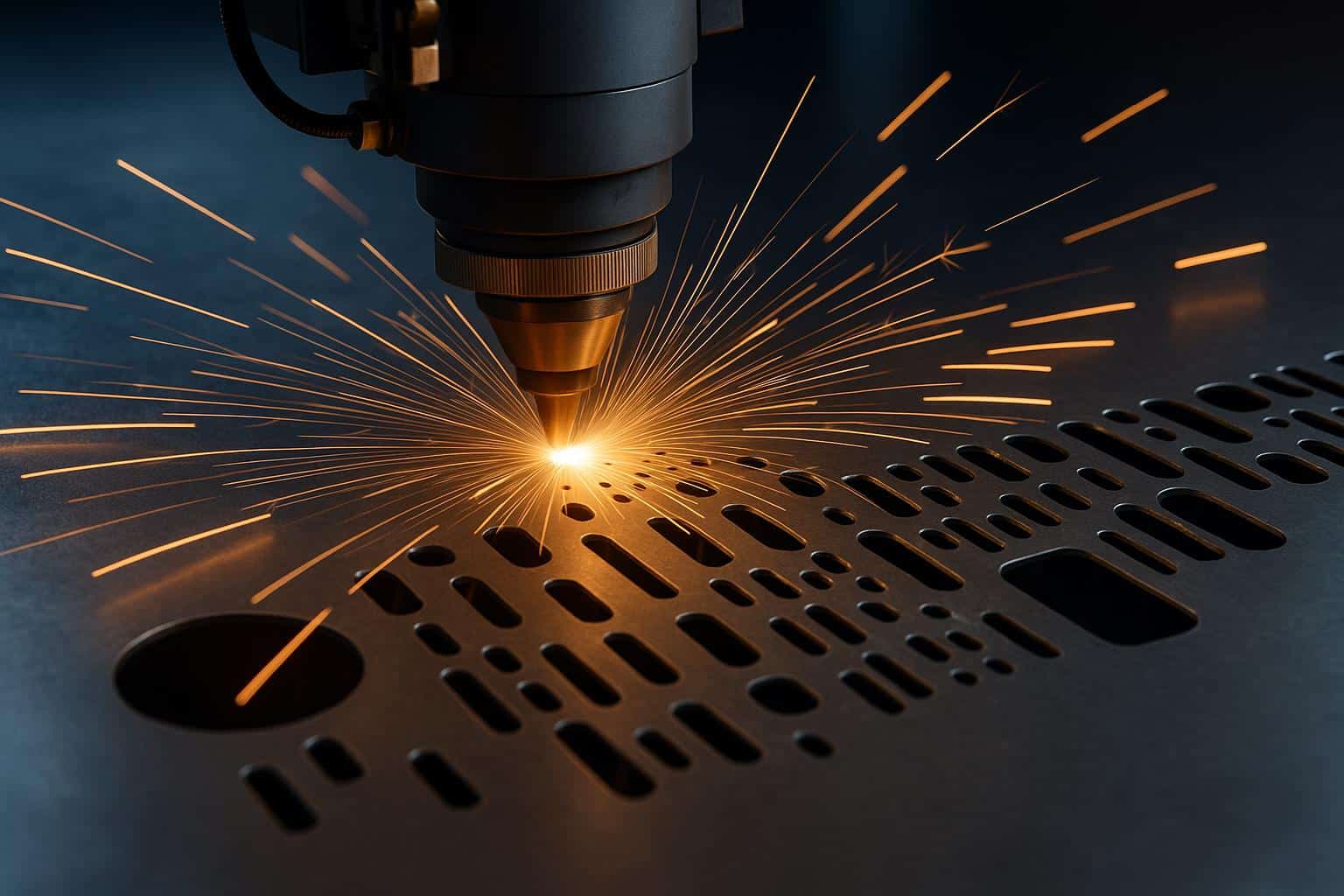
The days of hand-cutting, hand-bending, and hand-welding metal have come and gone. With laser technology, fabricators now have greater control over heat, motion, cutting paths, and the placement of welds. This change is enabling manufacturers to meet challenging production and quality goals while producing cleaner parts.
The change isn’t just that machines replace older machines. Today’s laser technology is able to link cutting, welding, automation, sensing, and software into a more controlled manufacturing system. For businesses considering Laser Welding Solutions, it means they might be able to take on challenging tasks with more precision and repeatability. Here is how laser technology is revolutionizing modern metal fabrication:
More Precise Cutting and Forming
In laser cutting, the energy of laser beam is controlled to separate the metal with a focused beam. It can form detailed shapes, small openings, and complex profiles without using any cutting tools, as per hands-on operation. Fiber lasers, like other lasers, are widely employed in metal cutting and yield an accurate and reliable cut for a variety of applications.
The accuracy of this can make subsequent manufacturing operations easier since it ensures tighter tolerances when joining parts together later. Good fit-up can minimize unnecessary fit-up for assembly and can aid in achieving more consistent welding results. Simple production shapes as well as complex designs can be processed with laser, too, giving the engineer space for designing their component.
Laser Welding Brings Heat under Control
One of the most obvious ways that laser technology has revolutionized fabrication is through welding. A concentrated beam produces a weld pool that is small and located near the joint, resulting in minimal heat input into the adjacent metal. This lower heat input minimizes the amount of distortion, making it an important feature for fabricators when handling thin, delicate, or dimension-sensitive parts.
Precision laser welding is suitable for challenging applications, such as reducing distortion, inputting less heat, and producing narrower welds, according to experts at Micro Weld, Inc. They perform laser welding for precision manufacturing such as medical, industrial, and other uses. This enables laser welding to be utilized for a wide range of applications where hot-mix methods may result in an excessive generation of heat or require heavy finishing operations.
Faster Production without Sacrificing Control
Today, speed is important in the process of manufacturing, but speed doesn’t make a quality manufacturing process. Using laser equipment can make many tasks quicker than standard methods and enable equipment to go through the task quickly without losing control. Automated systems make it possible to duplicate programmed motions, which help to minimize variation in parts and promote consistent production.
It is possible to attach modern laser processing equipment to automatic loading, positioning, robot, and production software. This can lower the amount of downtime between tasks and assist manufacturers in ensuring material flow within the shop. In some more complex systems, one machine can be used for cutting, welding, or other laser processes depending on the machine and set-up.
Better Quality with Less Rework
One of the very great benefits of controlled laser processing is that it allows for fewer defects, even though there is some inconsistency in cutting or too much heat. Finishing with clean cuts and precise placement of the welds can facilitate the assembly and inspection of finished parts. Similarly, in welding, a small heat-affected zone can prevent the adjacent features from unwanted thermal changes.
If cost savings in finishing time are only a minor benefit of less rework, that’s not the best use of dynamic rework. Prevent tool/sample changeovers, save down time, and get more time in the assembly of parts. Additionally, laser processes can be better monitored and programmed. In turn, this assists manufacturers in ensuring quality control when they work in repeating batches.
Supporting Smaller and More Complex Parts
Modern products are much smaller than designs in the past. Not to mention, they have much tighter built-in features. Where a large heat source would be difficult to control, a large amount of heat may be needed for precise joining or cutting. Using laser technology makes these tasks easier. This is because it generates energy in a focused work area.
This idea is further developed with micro-scale laser welding. This is used for applications such as smaller parts where weld location and heat control, are particularly crucial. Automated laser machines can carry it out, too. Plus, it can help manufacturers achieve consistent quality with each run.
In conclusion, laser technology is changing the metal fabrication industry by fusing precision, speed, controlled heat, and automation. It can manifest itself in the cutting and welding process, micro-fabrication, quality control, and production flow – but it depends on the job. Laser systems will continue to be an essential component in the manufacture of the next generation of manufactured metal products as manufacturers increase their requirements for more precise parts and more efficient production systems.

