


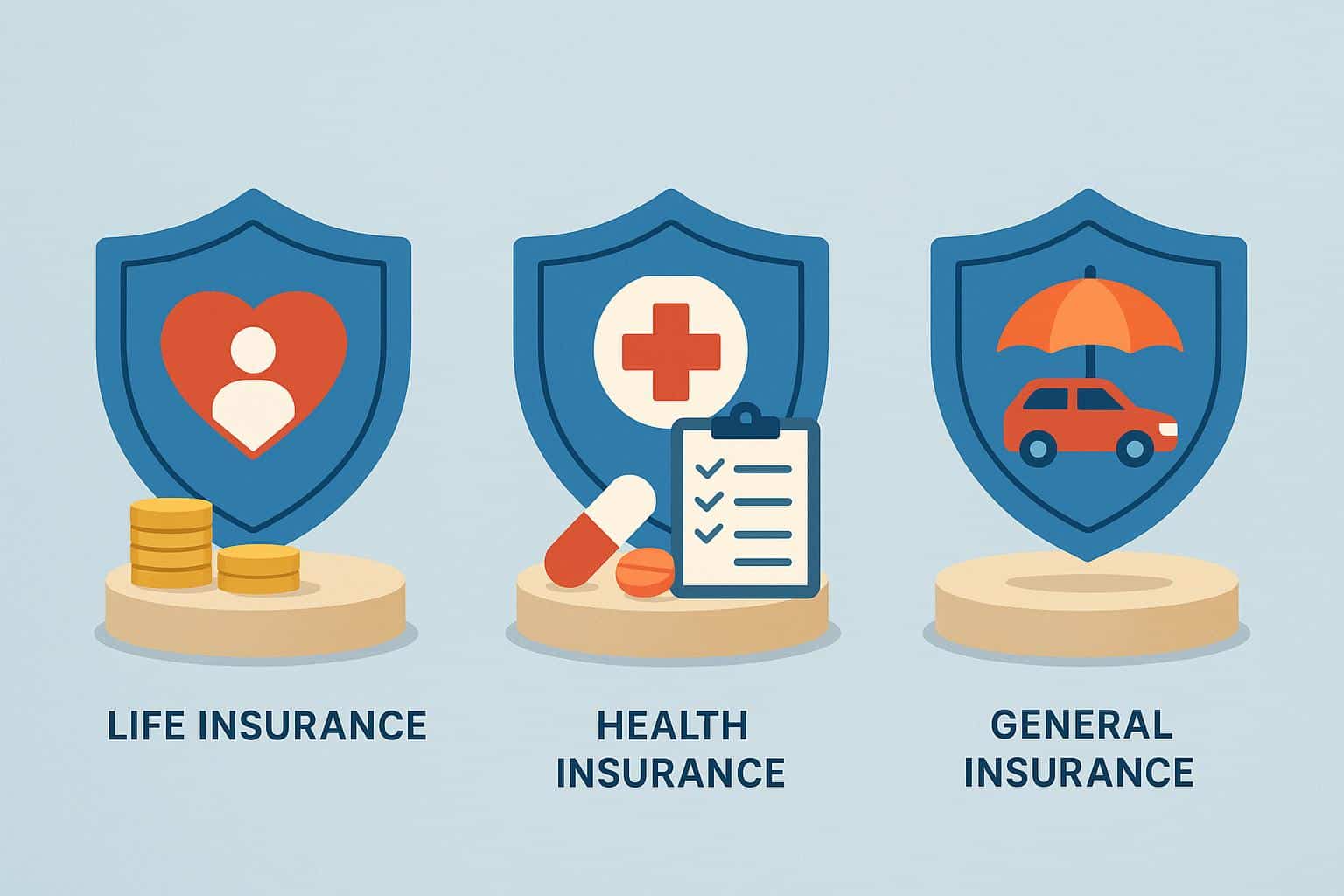
Choosing the right insurance can feel overwhelming and that’s normal. Each type of insurance is designed to serve a different purpose. Understanding these differences is key to making informed decisions. Broadly, insurance falls into three main categories: life insurance, health insurance and general insurance. While they may seem similar at first, each works differently and offers distinct types of protection.
This blog explains all three types to help you understand which one works best for you.
What is Life Insurance
Life insurance provides financial security for your family by offering a payout to your nominee if you pass away during the policy term. You pay premiums at regular intervals and depending on the type of plan you choose, the benefit may be paid to your family upon your death or to you if you survive the policy period.
Types of Life Insurance You May Come Across
Life insurance is useful when you have dependents who rely on your income, want to build long-term savings or need a dependable financial safety net for your family. There are several types of life insurance plans, and each is designed to serve a specific purpose. These include:
- Term life insurance: It provides a payout to your family if you pass away during the policy term, ensuring they remain financially protected in your absence.
- Whole life insurance: It covers you for your entire lifetime. This type of plan may also build a cash value that you can receive later.
- Endowment plans: This includes a mix of savings and insurance. Your premium is partly invested and partly used for insurance cover.
- Unit-linked insurance plans (ULIPs): These are a combination of market-linked investments and life insurance coverage.
- Money-back plans: They offer regular payouts known as survival benefits throughout the policy term.
- Child plans: They are designed to secure funds for your child’s future needs.
- Retirement plans: This type helps build a long-term retirement corpus with insurance benefits.
What Health Insurance Covers
A health insurance policy covers your medical expenses when you fall sick, need treatment or are hospitalised. It helps you manage rising healthcare costs and get access to better treatment facilities. This type of insurance usually works in two ways: through cashless treatment at network hospitals or reimbursement if you pay upfront at a non-network hospital and file a claim later.
Most health insurance plans include coverage for hospitalisation expenses, pre-and post-hospitalisation costs, daycare procedures and emergency medical care. The premium you pay usually depends on factors such as your age, medical history and the amount of coverage you choose.
Types of Health Insurance
Health insurance comes in many forms. The most common ones include:
- Individual health insurance: It covers only one person. The premium is mostly based on age and medical background.
- Family health insurance: This is also known as a family floater plan, as it covers the entire family under a single sum insured. Only one premium is paid and anyone in the family can claim benefits until the limit is reached.
- Senior citizens health insurance: It is designed for people above 60 years of age. Premiums can be higher because of increased health risks.
What General Insurance Includes
General insurance protects you against financial losses that do not involve life or long-term health risks. It covers your vehicle, home as well as offers protection during travel and for personal belongings. These policies provide compensation for damages or losses due to events such as accidents, theft or natural disasters. Most general insurance plans operate on an annual renewal basis.
Main Types of General Insurance
Some common categories include:
- Motor insurance: This insurance covers your two-wheeler or four-wheeler. It may include third-party cover for legal liabilities and comprehensive cover for damages to your own vehicle.
- Home insurance: This financially safeguards your home and its contents from events like fire, theft, floods or other natural calamities.
- Travel insurance: It covers trip-related issues such as cancellations, delays, baggage loss or medical emergencies while travelling.
Key Differences Between Life, Health and General Insurance
Here is a table to help you compare life, health and general insurance:
| Parameter | Life Insurance | Health Insurance | General Insurance |
| Purpose of the cover | Financial support for your family after your death | Covers medical and hospital expenses | Protects assets like vehicles, homes or travel plans |
| Contract tenure | Long-term. Usually 10–30 years or even lifelong | Usually 1–5 years with renewal required | Mostly annual policies |
| Benefit structure | Offers a lump sum payout | Covers ongoing medical bills and treatment costs | Compensates for loss or damage to assets |
| Premium structure | Regular premiums over long periods | Premium varies by age, medical history and sum insured | Typically, a single annual premium |
Conclusion
Choosing the right insurance is not just about understanding the differences; it is also about aligning them with your real-life priorities. Start by listing what you truly need: to protect your income, your health or your assets. It is also important to check whether your current health insurance policy or family health insurance plan offers enough coverage for medical needs.
A clear assessment of your financial responsibilities, dependents and risks will help you build a balanced mix of insurance that fits your life now and in the long run.
