


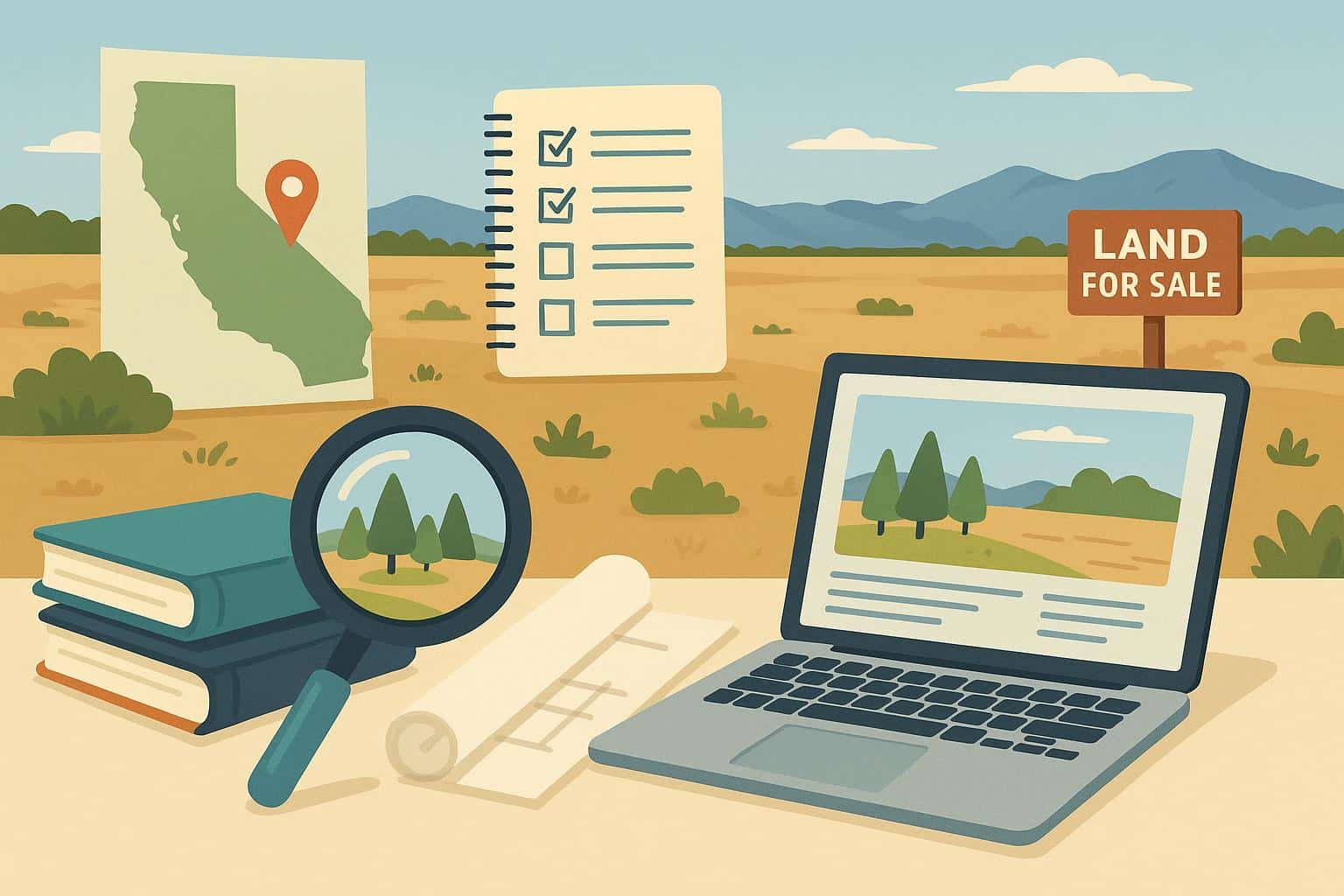
Buying vacant land may offer more flexibility than buying a property with an existing home. However, this decision requires more care.
Here are some key details to look into:
Property access
Check access first! Can you legally and easily reach the property? On a map, a parcel can look like it is very near a roadway. But it may not be directly accessible.
So, determine whether it is located on a public road and whether any easements or access agreements exist. If access is unclear, seek professional clarification.
Zoning and permitted uses
Don’t assume you have the right to use any Land For Sale in California in any way you prefer. Local zoning regulations may dictate if a property is suitable for use as a residence, farm, business, or other use.
Call the local zoning planning department in your area to find out what zoning classification the property is in. It is also important to describe your intended use of the property and ask if it is allowed.
Being aware of this before you buy will stop you from buying a property that is not right for you.
Water and utilities
The Department of Housing and Community Development lists water, sewer, and other utility availability and access as key elements to consider when assessing land prior to development. Check if water, electric, sewer, gas, or any other services are on or offsite.
However, just because a utility line is there doesn’t mean it is available for connection without extra requirements or costs. Check with providers to see what services are offered. In addition, find out the process of connection.
Title and easements
A title search may uncover many hidden matters about the land. This can be in the form of:
- Liens
- Easements
- Restrictions
- Other interests in the land
Obtain a preliminary title report. It can help you find out:
- Who owns the property
- If there are any liens or encumbrances on the title
- The history of the title
Take the time to read the report with care and ask questions about anything that you don’t understand.
Property boundaries
Find out exactly where the property starts and finishes. Note that the boundary of the parcel on the map may not correspond to the legal property boundary.
Check the legal description of the property and also the survey data. If you’re unsure of anything, hire a qualified surveyor.
Soil and ground conditions
The use of the property may be restricted by:
- Soil type
- Drainage
- Slopes
- Other soil characteristics
So, do not judge a land solely by its looks.
When planning to build, consider whether further testing of the soil or the site is warranted. Also, take note of issues like:
- Erosion
- Standing water
- Steep areas
- Any unstable ground
They do not rule out land use. But they can impact the plans and costs.
Flood & environmental concerns
Identify potential environmental factors impacting the property. Depending on location, you might need to research:
- Flood exposure
- Wildfire
- Protected areas
- Contamination
- Other local issues
Don’t make your decision based on what you see when you visit a property. Certain hazards are best assessed by information from government agencies, maps, or a professional.
Environmental and site concerns are an important component of real estate due diligence because they can impact the value, desirability, or usefulness of a property.
Nearby development
Take the time to learn what’s going on in the neighborhood. Examine key points like:
- Houses
- Roads
- Businesses
- Undeveloped parcels
- Planned development in the immediate area
The neighborhood factors into your experience of the property and can impact your future plans. What appears to be the perfect site today may not be the same in the future due to development.
If available, consult local planning information. Consider whether any nearby projects might impact the area’s:
- Access
- Noise
- Traffic
- Character
Property taxes and other costs
Land purchase costs are not always a landowner’s total expense. Research current taxes for the property and ask about other applicable costs.
Depending on what you intend to do, costs may also include:
- Surveys
- Inspections
- Legal advice
- Utility connections
- Permits
- Site preparation
- Site improvements
Estimate these potential costs. This way, you will know whether you can afford the property.
Your long-term plans
Lastly, think about what you really need from the land. One size does not fit all when it comes to parcels.
When comparing options at Discount Lots, make a list of what you want to do with the land. Then review its:
- Location
- Zoning
- Access
- Utilities
- Physical condition
- Surrounding area
This is a basic precaution to avoid buying an impractical parcel.
Final thoughts
You do not need to know all of the details regarding land ownership yourself. But by taking the time to look into these specifics, you can find any issues before they become your responsibility.
If you are unclear about a legal, technical, or property-specific issue, consult a trained professional. They can help you review your options. The better you understand the property before you purchase it, the more easily you’ll be able to tell if it is right for you.
