





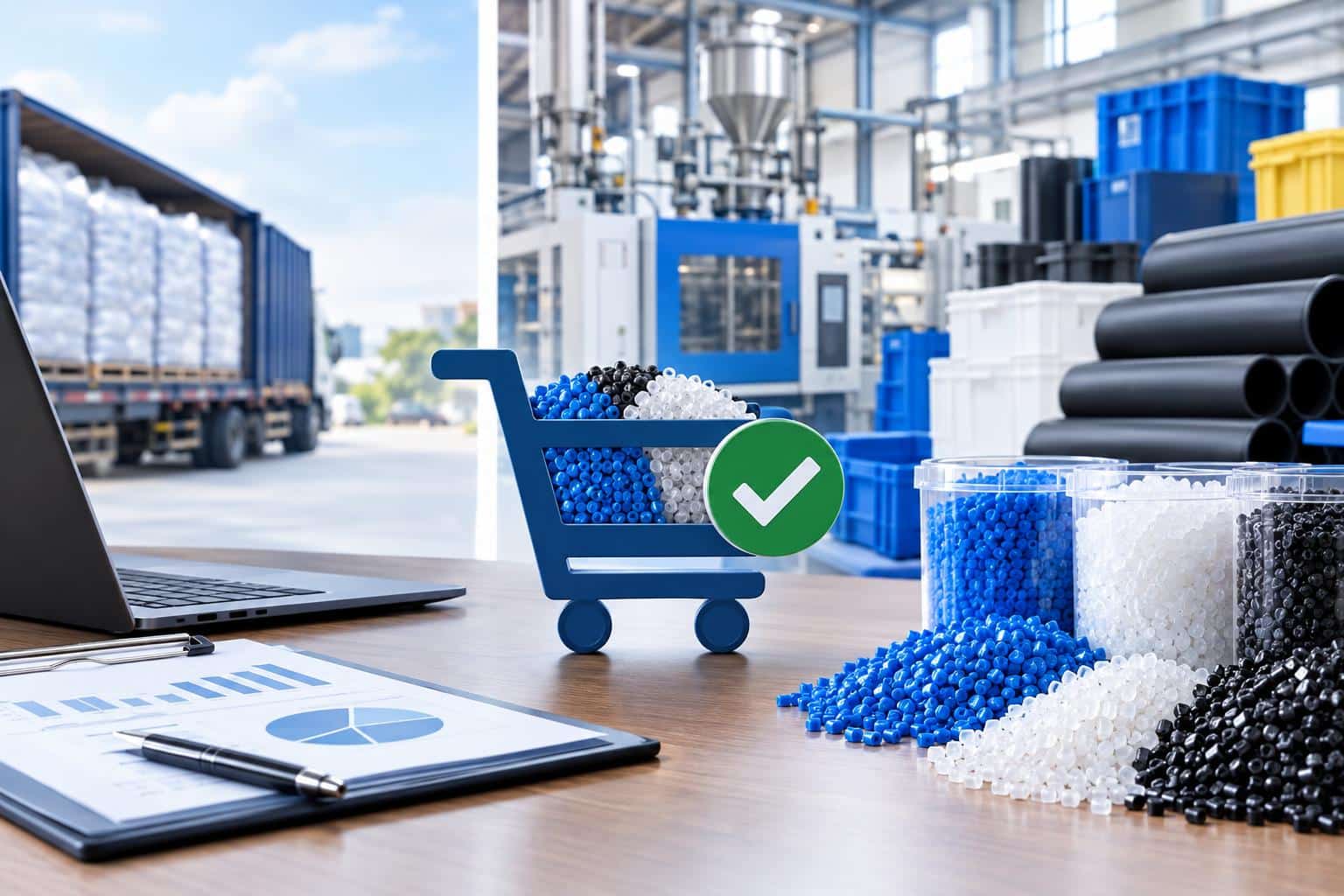
Across the United States, industrial plastic buyers are helping manufacturers recover value from production scrap, reduce disposal costs, and return usable materials to the manufacturing supply chain.
American manufacturing depends on a steady supply of raw materials. From automotive components and industrial packaging to construction products and consumer goods, plastics play an essential role in producing the products businesses and consumers use every day.
Yet manufacturing these products also generates significant amounts of leftover plastic. Injection molding, extrusion, blow molding, and thermoforming operations routinely produce excess material, including rejected parts, production runners, plastic purge, trim scrap, and surplus resin.
For manufacturers, these materials can create an expensive logistical problem. Scrap occupies valuable warehouse space, requires handling, and may result in disposal expenses. However, much of this material can retain commercial value when properly identified, separated, and processed.
This is where industrial plastic buyers play an important role.
Across the United States, companies that purchase post-industrial plastic scrap help manufacturers turn excess materials into marketable commodities. By connecting industrial waste streams with recycling operations and businesses that use recycled resin, plastic buyers help keep valuable resources circulating through the American manufacturing economy.
The Hidden Value of Industrial Plastic Scrap
Not all manufacturing waste is truly waste.
Unlike many post-consumer plastics, which may contain food residue, labels, adhesives, or multiple materials, post-industrial plastic scrap often comes from controlled manufacturing environments. Its resin composition may be known, and the material can frequently be collected before it becomes contaminated.
This makes certain industrial plastics attractive to recycling companies and manufacturers seeking secondary raw materials.
Common examples include:
- High-density polyethylene (HDPE): Found in industrial containers, plastic pallets, drums, buckets, and molded components.
- Polypropylene (PP): Used in automotive parts, reusable shipping containers, crates, and injection-molded products.
- Low-density polyethylene (LDPE): Commonly generated as packaging film, stretch wrap, and manufacturing sheeting.
- High-molecular-weight polyethylene (HMW): Used in heavy-duty industrial containers, dunnage, and material-handling equipment.
- Acrylonitrile butadiene styrene (ABS): Found in automotive components, appliance housings, and durable manufactured products.
- Nylon and other engineering plastics: Used in specialized industrial applications where strength, wear resistance, and durability are important.
These materials can enter recycling markets in several forms, including plastic purge, runners, regrind, pellets, off-spec resin, and obsolete manufactured parts.
Their commercial value depends on the resin type, material condition, available quantity, and demand from downstream processors.
For manufacturers generating consistent quantities of recyclable plastic, selling scrap can create an additional revenue stream while reducing the costs associated with waste management.
How Industrial Plastic Buyers Connect Waste With Manufacturing Demand
Industrial plastic buyers serve as intermediaries between companies generating plastic scrap and businesses capable of reprocessing or using that material.
Their work extends beyond simply purchasing unwanted plastic.
A qualified buyer must understand resin characteristics, material contamination, processing requirements, transportation costs, and the specifications demanded by manufacturers purchasing recycled feedstock.
The process generally involves several stages.
1. Material identification and evaluation
The buyer determines the plastic resin, its physical form, estimated quantity, and overall condition. Information about the manufacturing process can help establish whether the material is suitable for recycling.
2. Pricing and purchasing
Plastic scrap buyers evaluate the material against prevailing market conditions. Clean, consistent, single-resin materials generally have greater commercial potential than contaminated or poorly sorted loads.
3. Transportation and collection
Industrial scrap is commonly transported in gaylord boxes, bulk containers, bales, or truckload quantities. Buyers coordinate collection based on the volume, location, and transportation economics of the material.
4. Processing and preparation
Depending on its condition, plastic may be sorted, shredded, ground, or otherwise prepared for reuse. Rigid plastic products, for example, can be converted into smaller pieces known as regrind.
5. Return to the manufacturing supply chain
Reprocessed plastic can be sold to manufacturers that use recycled feedstock in suitable applications, including industrial containers, construction products, automotive components, and other manufactured goods.
This process creates a commercial connection between manufacturers that have excess material and those that can use it as an input.
Rather than treating every production byproduct as a disposal problem, businesses can evaluate whether it represents a recoverable resource.
Why American Manufacturers Are Working With Plastic Scrap Buyers
For manufacturers, industrial plastic recycling is not simply an environmental initiative. It can also be a practical business decision.
One of the most immediate benefits is the opportunity to recover value from material that might otherwise require paid disposal.
Consider an injection molding operation producing thousands of plastic components each week. Even with efficient production processes, rejected parts, startup waste, runners, and material purged from equipment can accumulate.
Without an established recycling program, the facility must allocate labor, storage space, and disposal resources to managing that scrap.
Working with an industrial plastic buyer can provide an alternative outlet.
Instead of continually paying to remove usable material, the manufacturer may be able to sell qualifying scrap and establish a recurring collection schedule.
The advantages can extend beyond direct material revenue.
Lower waste management costs: Recycling qualifying materials can reduce the amount of scrap sent to disposal facilities.
Improved warehouse efficiency: Regular scrap collection can free up floor space previously occupied by obsolete inventory, rejected products, or bulk containers.
Better material accountability: Separating scrap by resin and production source can help manufacturers better understand where material losses occur.
More predictable operations: Establishing an ongoing relationship with a plastic buyer can simplify the handling of recurring production scrap.
Support for sustainability objectives: Recovering usable material can help businesses reduce waste and document their recycling activities.
Actual financial benefits vary depending on material quality, scrap volume, market pricing, and logistics. Nevertheless, evaluating industrial plastic scrap as a potentially saleable material rather than automatically classifying it as waste can reveal opportunities that manufacturers might otherwise overlook.
The Role of Seraphim Plastics in Industrial Material Recovery
One example of this business model is Seraphim Plastics, a U.S.-based company specializing in the purchase and processing of post-industrial plastic scrap.
Headquartered in Memphis, Tennessee, the company operates a 60,000-square-foot reprocessing facility and works with manufacturers, warehouses, distributors, and other commercial operations generating industrial plastic waste.
With management experience spanning more than 25 years in the plastics recycling industry, Seraphim Plastics focuses on helping businesses recover value from materials generated during manufacturing and industrial operations.
The company purchases qualifying materials such as HDPE, polypropylene, plastic purge, regrind, surplus pellets, industrial totes, plastic pallets, crates, and other recyclable industrial plastics.
Through its purchasing and processing operations, the company helps connect manufacturers with downstream markets for recovered plastic materials.
For businesses searching for industrial plastic scrap buyers, Seraphim Plastics provides material evaluation, purchasing, and logistics coordination for qualifying commercial quantities.
Although its operations have a strong presence throughout the Mid-South and surrounding manufacturing regions, the company also evaluates industrial plastic purchasing opportunities across the United States.
Its approach reflects a broader function of the industrial recycling industry: identifying recoverable materials, establishing efficient collection channels, and preparing plastic scrap for productive reuse.
What Determines the Value of Plastic Scrap?
Manufacturers considering selling industrial plastic often ask a straightforward question: How much is the material worth?
There is no universal price for industrial plastic scrap.
Unlike standardized commodities with relatively transparent market quotations, recycled plastic materials can vary considerably in composition, quality, and processing requirements.
Several factors influence what plastic buyers are willing to pay.
Resin type
Different polymers have different processing characteristics and end-use markets. HDPE, polypropylene, LDPE, ABS, and engineering plastics may command different prices depending on supply and demand.
Material cleanliness
Plastic free from metal, paper, wood, adhesives, and other contaminants is generally easier to process. Contamination can increase processing costs and reduce the number of potential buyers.
Consistency and separation
A predictable stream of a single resin is typically more marketable than an unidentified mixture of different plastics.
Manufacturers that separate materials by resin, color, and production process may improve the attractiveness of their scrap.
Volume and frequency
Larger, consistent quantities can make collection and transportation more economical. A facility generating several truckloads of the same material each month may have different purchasing opportunities than one producing small, irregular quantities.
Location and transportation
Freight costs influence the economics of industrial plastic purchasing. Distance to processing facilities, material density, loading requirements, and shipment size all affect the net value of a transaction.
For manufacturers, the most effective approach is to provide potential buyers with accurate material specifications, estimated weights, photographs, and information about how frequently the scrap is generated.
This allows buyers to determine whether the material qualifies for purchase and provide a more informed quotation.
How Manufacturers Can Prepare Plastic Scrap for Sale
Businesses do not necessarily need to invest in expensive recycling equipment to begin recovering value from production scrap.
In many cases, improvements to existing material-handling procedures can make industrial plastic more suitable for resale.
The first step is identifying which materials are generated during production. Manufacturing managers should distinguish between reusable production scrap, contaminated waste, and surplus inventory that may have commercial value.
Next, facilities should establish procedures for separating plastics by resin type.
HDPE, polypropylene, and other materials should generally be kept in designated containers rather than mixed together. Where practical, natural-colored and colored materials can also be separated.
Cleanliness is equally important. Scrap should be protected from unnecessary exposure to dirt, moisture, metal, and unrelated waste.
Manufacturers should also document material volumes.
Recording the approximate pounds generated each week or month helps determine whether a recurring collection arrangement is practical.
Finally, businesses should communicate with prospective plastic buyers before making major investments in grinding, baling, or other processing equipment.
A buyer may prefer material in a particular form, and unnecessary processing can sometimes increase costs without improving its market value.
By understanding buyer requirements early, manufacturers can establish a more efficient scrap recovery program.
Supporting a More Resource-Efficient American Manufacturing Industry
The value of industrial plastic recycling extends beyond individual transactions.
American manufacturers operate in competitive markets where raw material costs, production efficiency, and supply chain reliability influence profitability.
Recovered plastic can provide an additional source of manufacturing feedstock for applications where recycled resin meets the required performance and quality specifications.
This does not mean every plastic can be recycled indefinitely or that recycled material is appropriate for every product.
Some applications require virgin resin because of technical, regulatory, or quality considerations. Repeated processing can also affect material properties, depending on the polymer and recycling method.
However, many industrial applications can incorporate properly processed recycled plastic.
For example, recovered HDPE may be used in suitable industrial containers or molded products, while recycled polypropylene can be incorporated into certain automotive, packaging, and material-handling components.
By helping recover these materials, industrial plastic buyers support a supply chain in which manufacturing byproducts can become inputs for further production.
The resulting benefits may include reduced disposal requirements, improved material utilization, and less dependence on newly produced resin for qualifying applications.
For businesses seeking greater efficiency, industrial recycling represents an opportunity to align environmental objectives with practical economic considerations.
Choosing the Right Industrial Plastic Buyer in the United States
Not every recycling company purchases the same materials or operates under the same requirements.
Manufacturers evaluating plastic buyers should look beyond the initial price quotation and consider whether a prospective partner can consistently handle their material stream.
Important questions include:
- Does the buyer purchase the specific resin and form of plastic being generated?
- What minimum volume is required for collection?
- Does the company provide transportation or coordinate freight?
- Are there specific requirements for cleanliness, sorting, or packaging?
- How is material pricing determined?
- Can the buyer accommodate recurring shipments?
- Does the company have established processing capabilities or downstream recycling relationships?
For facilities producing substantial quantities of post-industrial plastic, finding a buyer with relevant material expertise and dependable logistics can be more valuable than pursuing an isolated transaction.
An effective purchasing relationship can transform scrap handling from an occasional waste management task into an established component of manufacturing operations.
Turning Manufacturing Waste Into Economic Opportunity
As American manufacturers continue looking for ways to control operating expenses and improve resource efficiency, industrial plastic recovery offers a practical opportunity.
Materials once treated exclusively as waste may retain measurable commercial value when properly identified, collected, and directed into suitable recycling markets.
Industrial plastic buyers help make that process possible by connecting manufacturing facilities with the infrastructure and downstream demand needed to return recovered plastics to productive use.
For companies generating HDPE, polypropylene, plastic purge, regrind, surplus resin, or other industrial plastic scrap, the first step is understanding what materials they produce and whether those materials meet commercial purchasing requirements.
Companies such as Seraphim Plastics demonstrate how specialized purchasing, processing, and transportation services can help bridge the gap between industrial waste generation and manufacturing demand.
Ultimately, the opportunity is not simply to recycle more plastic. It is to recognize that a material leaving one production line may still have value as a raw material for another.
In an increasingly competitive manufacturing economy, recovering that value can be both an operational advantage and a responsible use of industrial resources.

