


There’s a particular kind of frustration that comes from spending a small fortune on skincare only to discover that your skin looks worse than it did before. You started with good intentions, perhaps hoping to achieve a brighter complexion, smoother texture or fewer visible imperfections. Then came the exfoliating acids, concentrated serums and increasingly elaborate evening routines. At first, everything seemed promising. But somewhere along the way, your skin became tight, uncomfortable and strangely sensitive to products you’d previously used without any problems. Even your favourite moisturiser now causes a slight stinging sensation. It’s tempting to assume that another treatment will put things right, but the real answer may involve doing considerably less.
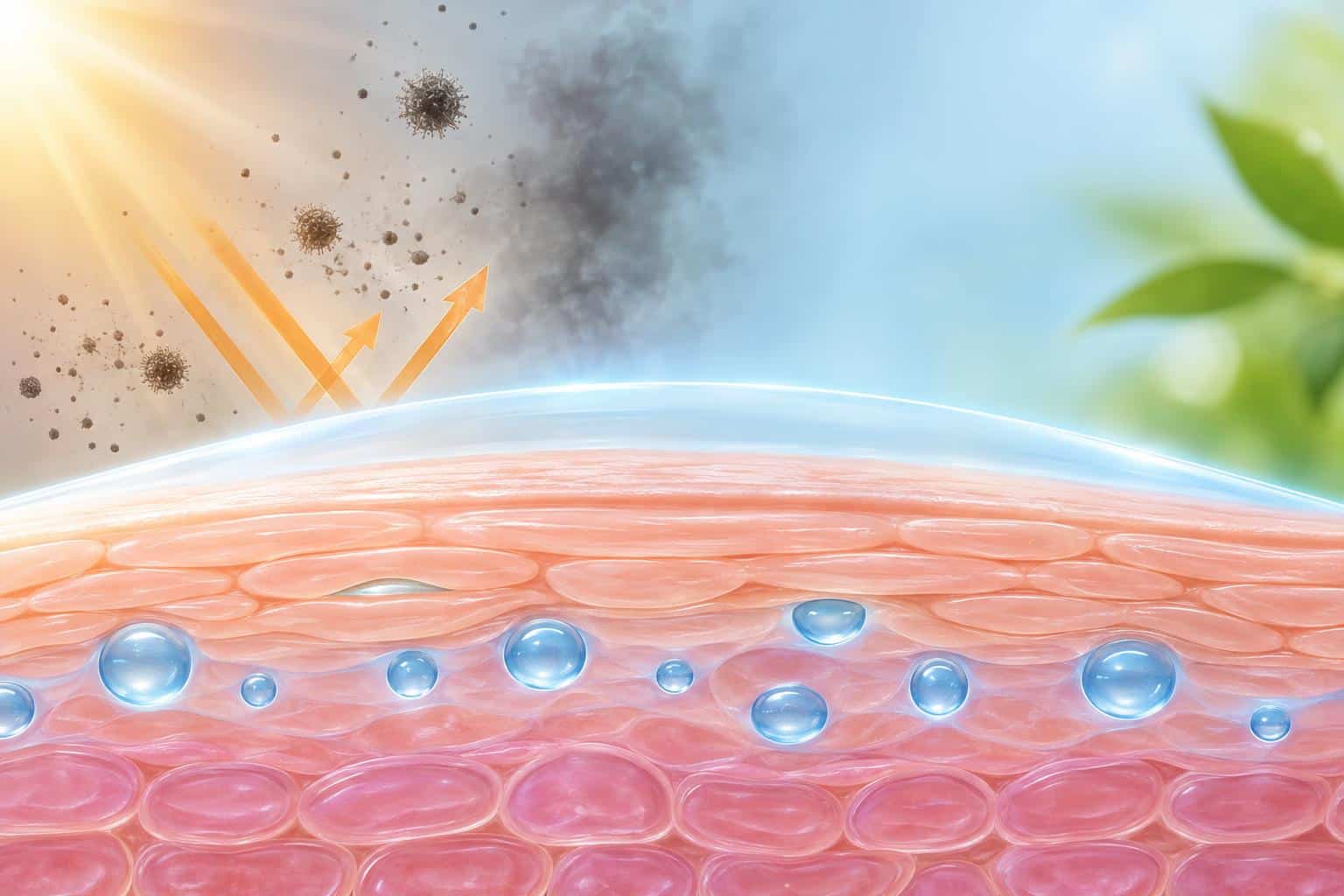
For all the attention given to collagen, wrinkles, pigmentation and achieving the perfect glow, the skin’s protective barrier receives surprisingly little consideration until something goes wrong. Yet this outermost defence system plays a fundamental role in maintaining healthy skin. It helps prevent excessive moisture loss, limits the entry of potential irritants and supports the conditions needed for skin to function normally. When the barrier is working effectively, skin is generally better equipped to tolerate everyday environmental challenges. When it’s disrupted, even an expensive skincare routine can become uncomfortable and counterproductive.
A useful way to understand the skin barrier is to imagine the outer layer of your skin as a carefully constructed brick wall. The skin cells act rather like bricks, while a mixture of naturally occurring lipids, including ceramides, cholesterol and fatty acids, helps form the material holding everything together. This arrangement isn’t completely impermeable, nor should it be. Healthy skin needs to perform numerous biological functions, but its structure helps regulate what moves in and out. When the organisation of this protective layer becomes compromised, moisture can escape more readily and substances that would ordinarily cause little difficulty may trigger irritation.
This is why dehydration and sensitivity can sometimes appear together. Someone may initially notice that their skin feels unusually dry, even after applying moisturiser. Fine lines may seem more obvious, makeup might cling to flaky patches, and the complexion can begin looking dull or uneven. As the problem develops, ordinary products may cause discomfort, with redness, itching or a burning sensation accompanying the dryness. These symptoms don’t automatically confirm barrier damage, since conditions such as eczema, rosacea and contact dermatitis can produce similar effects. Nevertheless, they can indicate that the skin is struggling and deserves a gentler approach.
What makes this particularly interesting is that the people most determined to improve their skin can sometimes contribute to the problem without realising it. Exfoliation provides a good example. Used appropriately, certain exfoliating products can help remove accumulated dead surface cells and improve the appearance of uneven texture. However, the assumption that more frequent exfoliation must produce progressively smoother skin can encourage people to overdo it. Someone might use an exfoliating cleanser in the morning, apply an acid-based serum at night and add a stronger treatment several times a week. Each product may be reasonable in isolation, but the combined routine can become too irritating for their skin to tolerate comfortably.
The same difficulty can arise with other active ingredients. Retinoids, for instance, can provide benefits for particular concerns, including acne and visible signs of photoageing, but they may cause dryness or irritation, especially when introduced too quickly. Combining multiple potent products without allowing time for adjustment can make those reactions more likely. The solution isn’t necessarily to abandon effective ingredients permanently. It’s to recognise that the skin’s tolerance matters just as much as the potential benefits of the treatment, and that a slower, more considered approach may achieve better results.
Interestingly, an impaired barrier doesn’t always look the way people expect. Oily skin can also become dehydrated or irritated, meaning a shiny complexion doesn’t guarantee that the protective layer is functioning optimally. Someone with naturally oily skin may respond to excess shine by cleansing more aggressively, applying harsh toners or avoiding moisturiser altogether. Unfortunately, those habits can increase discomfort without addressing the underlying cause of the oiliness. Choosing a lightweight, suitable moisturiser and a gentle cleanser may be more beneficial than continually attempting to remove every trace of natural oil.
This is where understanding individual skin requirements becomes more valuable than following fashionable routines. The popularity of a particular ingredient doesn’t mean everyone needs it, and a product that suits one person’s complexion may be unsuitable for another. A thoughtful approach, including professional skincare guidance where appropriate, can help people distinguish between products that support their skin and those creating unnecessary irritation. Specialists such as SkinGym can form part of that conversation, particularly for individuals seeking advice about suitable cosmetic skincare routines and treatments. Where symptoms are persistent, severe or unexplained, however, assessment by a qualified healthcare professional is important.
Perhaps the most effective change someone can make when their skin becomes uncomfortable is also the least exciting: simplify everything. Instead of searching for increasingly sophisticated products, temporarily focus on a gentle cleanser, an appropriate moisturiser and suitable daytime sun protection. Products containing moisturising ingredients such as glycerin or hyaluronic acid can help attract water, while formulations with ceramides and other skin-compatible lipids may support the barrier’s protective function. Occlusive ingredients, including petrolatum, can help reduce moisture loss, although the most comfortable formulation will depend on the individual.
It’s worth being cautious about the language used in skincare marketing. Products are frequently described as repairing, rebuilding or restoring the barrier, sometimes with suggestions of dramatic results almost immediately. While a moisturiser can improve skin comfort and reduce water loss relatively quickly, recovering from significant irritation isn’t necessarily instantaneous. The skin undergoes continuous renewal and repair, and the time required for symptoms to settle depends on the cause and severity of the problem. Persisting with an irritating routine while applying a product advertised as barrier-repairing may undermine the very improvement you’re trying to achieve.
Environmental conditions can also influence how comfortable the skin feels. Cold weather, low humidity and prolonged exposure to indoor heating may increase dryness for some people, while frequent washing and contact with detergents can disrupt the skin’s outer layers. Hot showers can aggravate dryness, particularly when combined with strong cleansers or vigorous rubbing. These factors are easily overlooked because they aren’t part of the skincare products sitting on the bathroom shelf, yet modifying everyday habits may be just as useful as changing what you apply to your face.
Sun protection deserves special attention because it supports more than the appearance of the complexion. Ultraviolet radiation can damage skin and contribute to premature ageing and pigmentation changes. Daily use of appropriate broad-spectrum sunscreen helps reduce these risks, although the most suitable product depends on individual circumstances and exposure. For someone experiencing irritation, finding a sunscreen that feels comfortable can be important, and testing a suitable alternative may be preferable to abandoning sun protection altogether. No single sunscreen formula will suit everyone, especially when the skin is already sensitive.
A particularly unhelpful misconception is that skincare must cause discomfort to be effective. Tingling, peeling and redness are sometimes interpreted as signs that active ingredients are doing their job. While certain treatments can produce temporary sensations or expected side effects, persistent burning, worsening redness or significant irritation shouldn’t be celebrated as evidence of progress. There is an important difference between a treatment producing gradual cosmetic improvements and a routine repeatedly leaving the skin inflamed. The goal should be results that the skin can tolerate, not simply the strongest possible reaction.
Another misconception involves the pursuit of completely flawless skin. Online photographs and carefully lit videos can create the impression that healthy skin should always appear perfectly smooth, uniformly coloured and reflective. In reality, normal skin has pores, texture and natural variation. It also changes with age, hormones, weather and numerous other influences. Trying to eliminate every visible irregularity can lead to unnecessary treatments and repeated product changes, particularly when the desired result isn’t realistic to begin with.
This doesn’t mean people should ignore concerns about their appearance or abandon products they enjoy. There is nothing wrong with wanting brighter, smoother or more even-looking skin. The important distinction is between supporting healthy skin while pursuing cosmetic improvements and compromising its comfort in the hope of achieving faster results. A good routine can include targeted treatments, but those treatments should complement the skin’s basic requirements rather than compete with them.
One of the clearest signs that a skincare routine is becoming more appropriate is often how ordinary the skin begins to feel. Washing your face no longer produces tightness, moisturiser feels soothing rather than uncomfortable, and everyday products stop causing unexpected reactions. These changes may not make dramatic before-and-after photographs, but they’re meaningful improvements in their own right. They also create a better foundation for considering additional treatments once the skin has settled.
It’s also worth accepting that some skin concerns need more than an adjusted cosmetic routine. Persistent inflammation, cracked or weeping skin, severe itching and recurring reactions may indicate a condition requiring medical assessment. Continuing to experiment with new products in these circumstances can make it harder to identify what’s causing the problem. A dermatologist or other appropriately qualified healthcare professional can help determine whether a specific condition or allergy requires treatment.
The growing interest in sophisticated skincare ingredients has brought genuine benefits, making effective formulations more accessible than ever. However, it has also encouraged the idea that the quality of a routine can be measured by the number of products used or the intensity of their effects. Neither is a particularly reliable indicator of success. A simple routine that leaves skin comfortable, hydrated and adequately protected may be more beneficial than an elaborate collection of treatments that continually causes irritation.
Perhaps the most useful shift in perspective is to stop treating the skin barrier as another cosmetic concern to tackle after everything else. It isn’t an optional extra or a fashionable ingredient trend. It’s part of the foundation on which healthy skin depends. When that foundation is functioning well, carefully selected products have a better chance of delivering their intended benefits without unnecessary discomfort. When it’s compromised, adding more treatments may simply make an already difficult situation worse.
Healthy-looking skin doesn’t have to mean an impossibly glossy complexion or the complete absence of texture. Sometimes the most convincing sign of progress is skin that feels comfortable throughout the day, tolerates an uncomplicated routine and no longer demands constant attention. The glow people spend so much time chasing may be appealing, but protecting the skin that produces it is a much better place to begin.
