


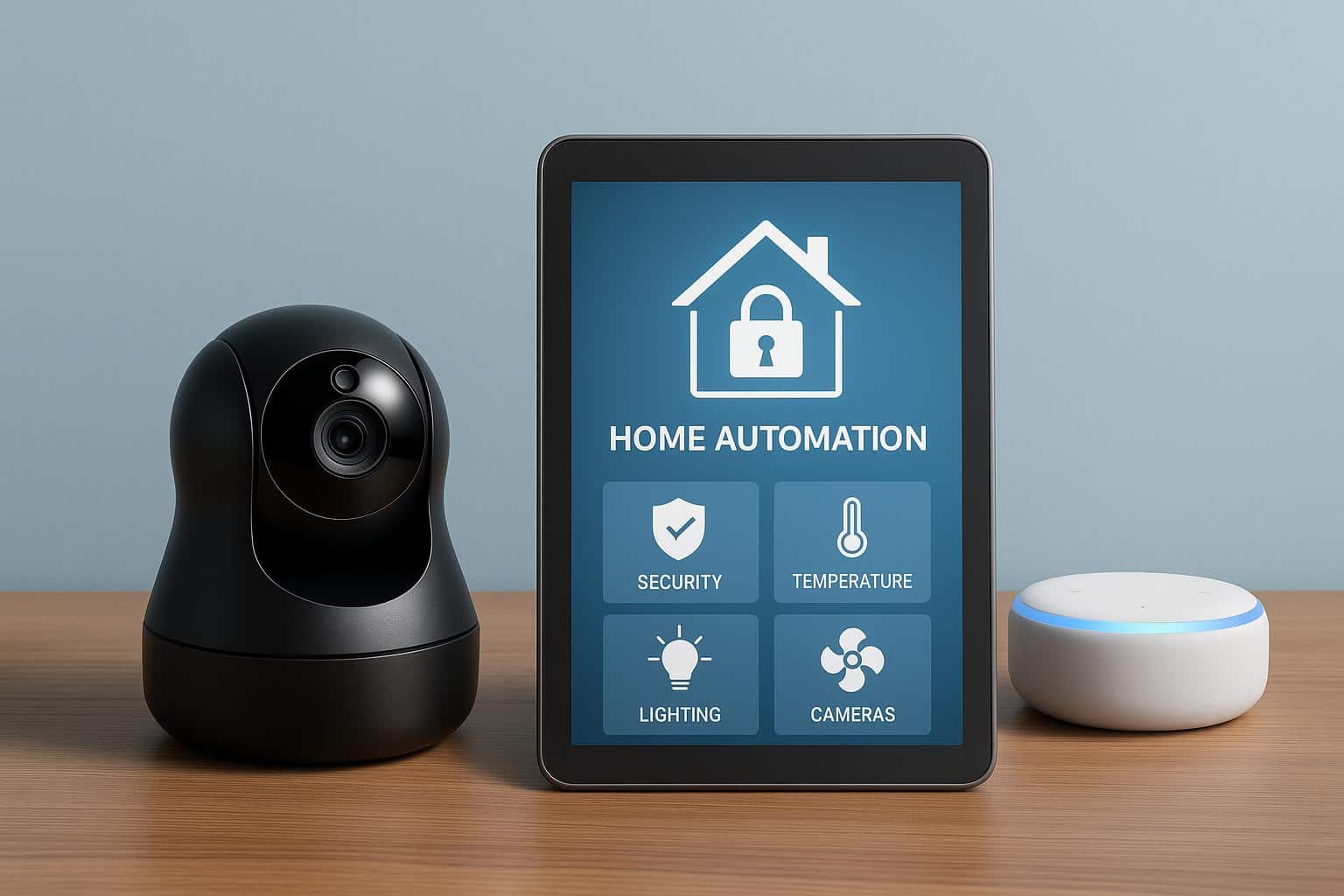
It wasn’t so long ago that home automation and home security were considered two separate and distinct things. These days however, the line of delineation between them is not so clear. It is more common than ever to see brands combine the two in single systems capable of improving both security and convenience.
That begs the question: as long as you are investing in home security, should you also simultaneously invest in home automation? The answer depends on your ultimate goals. If you plan to do both at some point, you might be better off combining them right from the beginning. On the other hand, home automation might not interest you at all.
A Unified System for Both
Homeowners install security equipment to protect themselves against property crimes, fire, carbon monoxide poisoning, and flood. Some also add medical services to their security packages. The entire thing is about improving safety.
Home automation targets energy efficiency and convenience. Some devices save money by better managing energy consumption. Other devices make daily life more convenient through automation and voice control. So what if you combine both home security and automation?
For starters, you get a unified system covering both aspects. A system from Vivint Home Security is the perfect example. You get one control panel along with a companion mobile app. With either, you can control every device on your system, including:
- Video cameras
- Automated lighting
- Smart thermostat
- Smart locks
If you also include professional monitoring with your system, personnel at a remote monitoring center keep track of your cameras, motion sensors, and smoke/CO detectors at all times.
Enhanced Home Security Capabilities
Combining the two entities also enhances home security capabilities. Consider the combination of video cameras and automated lighting. The cameras do what you would expect them to do: provide real-time surveillance footage of your property. Cameras act as a deterrent as well. Throw in automated lighting and you have something better.
Smart lighting can be programmed to mimic movement around your home. Different lights can go on and off at different times throughout the day and night, giving the impression that the property is occupied. An occupied house is a less attractive target in a criminal’s mind.
Let’s go one step further and throw in automated window blinds. They add to the illusion that someone is home when programmed to rise and lower at specific times during the day. As a bonus, smart blinds can help save energy by controlling how much direct sunlight enters your home.
Full System Integrations
Perhaps the most important benefit of investing in both home security and automation simultaneously is being able to build in system integrations right from the start. What do I mean by this? Think about smart home routines.
You could create the simplest of routines that do just one thing: turn off all the lights in your house. You link that routine to your security system. When the system is armed, all the lights automatically shut off. When it is disarmed, the lights go back on.
This sort of routine eliminates the need for you to walk around the house to turn off lights before you go to bed at night. Just use your phone to arm your security system once you’re snuggled under the blankets. Any lights still left on will shut off at the same time.
There are good reasons to keep home security and automation separate. But if you plan to invest in both, it probably makes sense to make those investments simultaneously. A unified system just works better.
